


















































































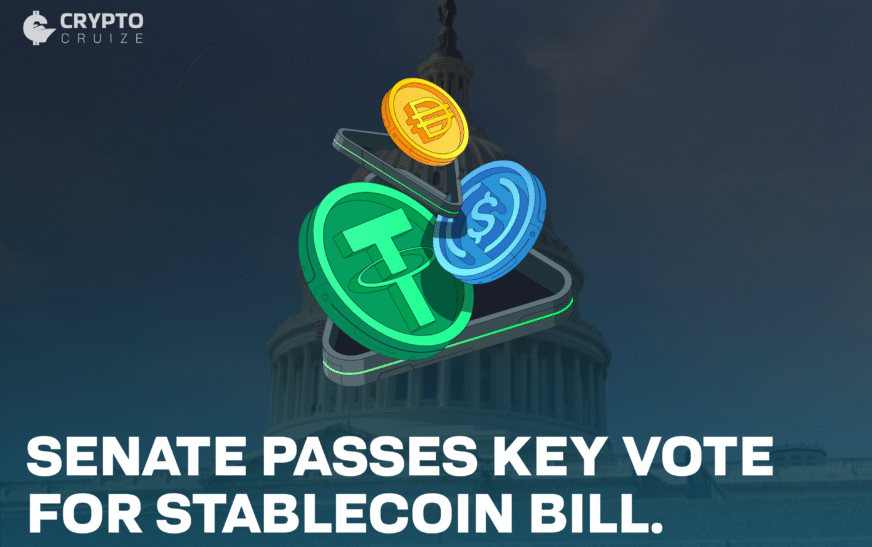
The U.S. GENIUS Act, a groundbreaking stablecoin bill, has taken a significant step toward becoming the first federal legislation to regulate stablecoins in the United States. With the Senate recently voting to pass a cloture motion for the bill, the stage is set for further legislative progress. However, the road to becoming law remains fraught with challenges, political debates, and procedural hurdles.
From Proposal to Debate: Tracing the GENIUS Act’s Journey
Introduced by Senator Bill Hagerty on February 4, the GENIUS Act has undergone multiple revisions to incorporate robust anti-money laundering (AML) measures, consumer protections, and custodial clauses. Initially blocked in the Senate, the bill gained momentum on May 20, when it passed the cloture vote with 66 votes in favour and 32 against, effectively ending a filibuster attempt.

This procedural victory enables the bill to move to the Senate’s full debate and amendment stage, a critical step before it can be sent to the House of Representatives. If successfully passed, the GENIUS Act will provide a unified federal framework for stablecoin regulation, a significant shift from the current fragmented state-level oversight.
Key Provisions of the GENIUS Act
The GENIUS Act introduces comprehensive regulations designed to enhance stability, transparency, and consumer trust in the stablecoin market. Below are its key provisions:
- Definition and Reserve Requirements
Stablecoins are defined as digital assets used for payments, anchored to fixed currency values, and backed by high-quality liquid assets like U.S. Treasury bonds or cash at a 1:1 ratio. Issuers must maintain these reserves separately from operating funds and undergo monthly certification. - Licensing and Dual Regulatory Framework
The bill introduces a dual regulatory framework, allowing stablecoin issuers to choose between state or federal registration. Issuers with a market value exceeding $10 billion will be federally regulated, while smaller issuers may operate under state frameworks that meet federal standards. - AML and Consumer Protections
Stablecoin issuers are classified as financial institutions under the Bank Secrecy Act and must adhere to stringent AML compliance, including customer due diligence and suspicious activity reporting. If an issuer declares bankruptcy, holders of stablecoins will have priority over other creditors. - Restrictions on Technology Companies
The bill imposes strict conditions on non-financial technology giants like Meta and Google, allowing them to issue stablecoins only if they meet robust regulatory requirements, including financial risk control and data privacy protections.
Trump Family Interests and Regulatory Oversight
The GENIUS Act has sparked heated debate over its implications, particularly concerning former President Trump’s alleged interests in the cryptocurrency market. Critics, including Senator Elizabeth Warren, argue that the bill does not adequately address potential conflicts of interest, such as Trump’s USD1 stablecoin project. Provisions explicitly targeting Trump’s crypto ventures were removed in recent revisions, a move that has drawn bipartisan criticism.

Additionally, Democratic lawmakers have raised concerns about the bill’s AML measures, arguing that they may not sufficiently address national security risks or enforce accountability for stablecoin issuers.
What’s Next for the GENIUS Act?
Although the GENIUS Act has cleared the Senate’s cloture vote, significant steps remain:
- Senate Debate and Amendment: The Senate will now conduct a detailed debate and amendment process. Any changes made during this stage could further delay progress.
- House of Representatives Approval: If passed by the Senate, the bill will move to the House, where it requires a simple majority to pass. With Republicans holding a narrow majority, the bill is expected to face fewer obstacles here.
- Reconciliation and Presidential Approval: Differences between the Senate and House versions must be reconciled, followed by a final vote in both chambers. The bill will then be sent to the President for approval or veto.
Potential Impact on the Stablecoin Market
If enacted, the GENIUS Act will reshape the stablecoin landscape in the U.S.:
- Market Consolidation: Smaller issuers may exit the market due to stringent reserve and compliance requirements.
- Increased Transparency: Monthly reserve certifications and public disclosures will boost consumer trust and attract institutional investors.
- Barriers for Tech Giants: Non-financial companies may face higher regulatory hurdles, potentially slowing their entry into the stablecoin market.
The Global Perspective
Treasury Secretary Scott Bessent has highlighted the bill’s significance, warning that the absence of federal regulation could push innovation overseas and weaken the U.S.’s financial leadership. By creating a cohesive regulatory framework, the GENIUS Act aims to solidify the U.S. as a leader in the global digital asset market.

The GENIUS Act represents a pivotal moment for stablecoin regulation in the U.S. While its passage through the Senate marks a critical milestone, the bill faces additional legislative scrutiny and political contention before it can become law. If successful, the GENIUS Act will not only establish a federal framework for stablecoins but also set the stage for greater stability, transparency, and consumer protection in the rapidly evolving crypto landscape.