
























































































The US Republican leadership is preparing to host a significant legislative event dubbed “Crypto Week” between July 14–18, with the aim of pushing forward three critical cryptocurrency bills. The initiative represents the GOP’s commitment to aligning with former President Donald Trump’s pro-crypto agenda, as he seeks to re-enter the White House with promises to make the US a global hub for digital assets.
What is Crypto Week?
Crypto Week is a planned series of legislative sessions in the House of Representatives, focused on passing three key bills related to the crypto industry:
- GENIUS Act – A stablecoin regulation bill
- CLARITY Act – A bill on crypto market structure and agency jurisdiction
- Anti-CBDC Surveillance State Act – A bill to block the creation of a US central bank digital currency (CBDC)
These efforts are led by senior Republican lawmakers including House Financial Services Chair French Hill, House Agriculture Committee Chair Glenn Thompson, and Speaker Mike Johnson. Johnson stated that Crypto Week will be used to deliver “the full scope” of Trump’s digital asset agenda.
GENIUS Act Takes Priority Over House’s Own STABLE Act
The GENIUS Act, which focuses on regulating stablecoins (digital assets tied to the value of a fiat currency like the US dollar), has gained strong traction. Interestingly, the House is prioritising this Senate-backed bill over its own version, the STABLE Act, despite having already passed it through committee in May.
Why the preference?
- The GENIUS Act already passed the Senate with bipartisan support.
- If the House approves it without amendments, it can go straight to Trump’s desk for signing.
- However, if the House alters parts of the bill – especially sections concerning issuer eligibility, state vs federal oversight, or compliance requirements – it would need to go back to the Senate for approval.
Legal experts say a reconciliation process may be needed to bridge differences between the two versions. Notably, the STABLE Act favours strict federal oversight, while the GENIUS Act allows states to supervise stablecoin issuers, a move seen as more business-friendly by many in the industry.
CLARITY Act: Defining Who Regulates What
The CLARITY Act seeks to end the ongoing confusion over who regulates which parts of the crypto industry, the SEC (Securities and Exchange Commission) or the CFTC (Commodity Futures Trading Commission).
This bill:
- Gives more authority to the CFTC, especially over crypto exchanges
- Lays down clear rules for disclosures, how exchanges handle customer assets, and recordkeeping
- Requires most crypto platforms to register with the CFTC
The bill has already passed through the House Financial Services and Agriculture Committees and now awaits a full House vote before heading to the Senate.
However, many Democrats oppose this bill, citing concerns about the Trump family’s growing crypto business interests, including their involvement in a crypto exchange and multiple tokens.
Anti-CBDC Bill: Aiming to Block a Digital Dollar
The third major bill is the Anti-CBDC Surveillance State Act. It aims to completely block the Federal Reserve from creating or managing a digital dollar known as a Central Bank Digital Currency (CBDC).
Key points of this bill:
- Prevents the Fed from testing, developing, or issuing any form of CBDC
- Stops the Fed from offering financial services directly to US citizens
The bill reflects growing concerns among some Republicans that a CBDC could be used for government surveillance, limiting financial privacy.
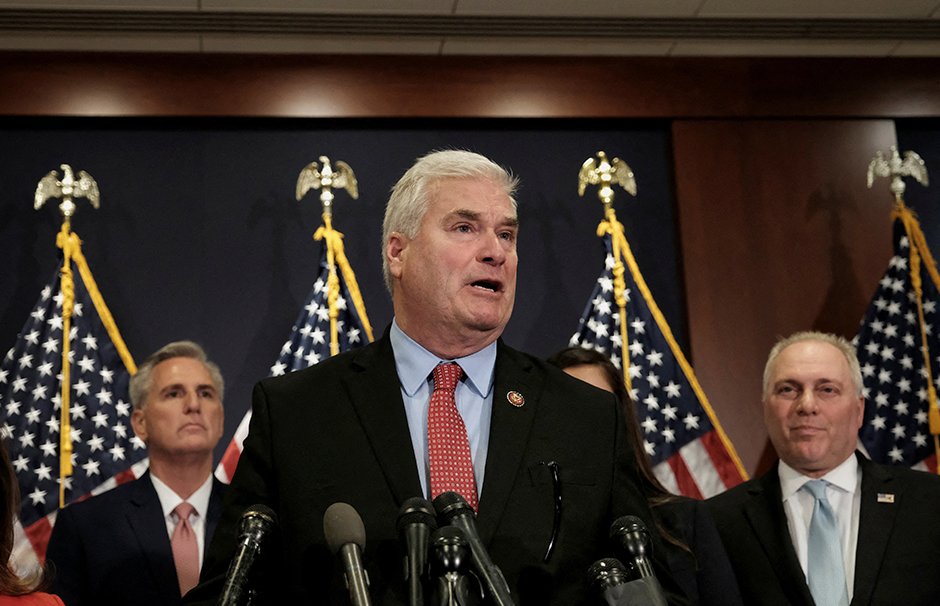
This bill was first introduced by House Majority Whip Tom Emmer and passed the House in May 2024, but it expired at the end of that Congress. Emmer reintroduced it, and the House Financial Services Committee approved it again in April 2025. A matching bill is now sitting in the Senate Banking Committee, with hopes for a swift parallel vote to fast-track the process.
Why This Matters for Crypto
Crypto Week could be a turning point for the US digital asset landscape. For the first time, lawmakers are addressing:
- How stablecoins should be regulated and by whom
- Who has authority over crypto assets and exchanges
- Whether or not a government-backed digital dollar should exist
The GOP’s push reflects the growing influence of the crypto industry in US politics. Trump has openly embraced digital assets in his 2024 campaign, and the Republican Party appears eager to support and codify his vision.
If the House successfully passes all three bills, they could become landmark laws shaping US crypto policy under a possible Trump second term.
With Crypto Week set for mid-July, all eyes will be on Capitol Hill as lawmakers debate the future of digital assets in the US. Whether these bills are passed smoothly or face political hurdles, one thing is clear: crypto regulation is no longer a side issue, it’s front and centre in American politics.