


















































































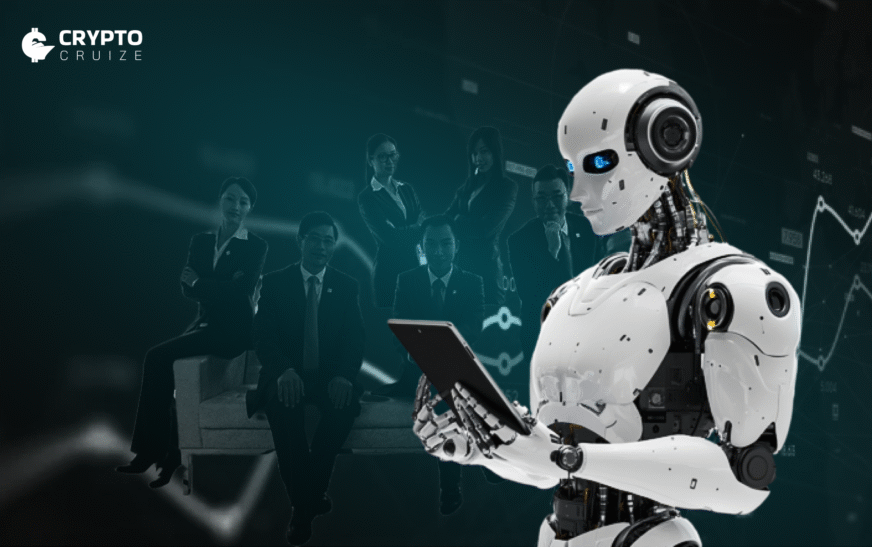
As artificial intelligence rapidly reshapes financial markets, the crypto sector finds itself at the forefront of experimentation. Automated agents powered by AI are increasingly being deployed for trading digital assets, raising questions about whether they will outperform human traders or instead amplify herd-like behaviour in an already volatile market.
Rise of AI in Crypto Trading
The adoption of AI tools in cryptocurrency trading has surged over the past two years. From predictive analytics to automated bots that scan real-time data, AI is being used to identify opportunities, mitigate risks, and execute trades faster than any human. Hedge funds and retail traders alike are experimenting with AI-powered agents, often touting improved efficiency and reduced emotional decision-making.
Crypto’s 24/7 nature makes it a natural testing ground. Unlike traditional stock markets with fixed hours, digital asset trading never stops. AI systems can continuously monitor global news, blockchain activity, and social sentiment to make decisions in milliseconds, an ability that humans simply cannot match.
Promise of Smarter, Faster Decisions
Advocates argue that AI can bring discipline to chaotic crypto markets. Human traders are vulnerable to fear, greed, and fatigue, while AI-driven systems operate purely on data. They can detect hidden correlations, anticipate short-term price movements, and execute trades without hesitation.
Large institutional players are already using AI to gain a competitive edge. By processing terabytes of market data, these algorithms can find patterns invisible to the human eye. For retail traders, platforms are increasingly offering simplified AI bots, promising automation at affordable rates.
Risk of Herd Mentality Amplification
Yet, the same qualities that make AI appealing also introduce new risks. Many trading agents are trained on historical market data and social sentiment analysis, which often mirror herd-driven behaviour. If too many systems act on similar signals, the result could be amplified volatility rather than stability.
For instance, during sudden market swings, AI bots may simultaneously trigger buy or sell orders, creating chain reactions that exaggerate the trend. Analysts warn this could make flash crashes or price spikes more frequent. Instead of diversifying strategies, mass adoption of similar AI agents may homogenize trading behaviour.
Human Edge Still Matters
Despite the hype, AI is far from eliminating human traders. Human judgment plays a critical role in interpreting geopolitical risks, regulatory shifts, and black swan events, areas where data-driven systems may struggle. While AI excels in short-term execution, humans remain crucial in crafting broader strategies and managing risk exposure.
Moreover, AI models are only as good as the data they are trained on. In crypto, where unverified information and sudden narratives dominate, reliance on AI without oversight can be dangerous. Experienced traders often act as the safeguard, ensuring that algorithms do not spiral into destructive behaviour.
Regulators Watching Closely
The growing use of AI in financial markets is attracting regulatory attention. In the U.S., the Securities and Exchange Commission (SEC) has already raised concerns about conflicts of interest in AI-driven trading systems. Meanwhile, European regulators are considering frameworks to ensure transparency and accountability in algorithmic trading.
In the crypto space, which remains less regulated, authorities fear AI could intensify risks for retail investors. Calls are growing for clear guidelines on how AI-driven bots should operate, especially as they gain popularity on centralized and decentralized exchanges.
Future: Partnership or Replacement?
The debate boils down to whether AI will replace traders or simply change their role. Most experts predict a hybrid future where humans set strategies and oversee operations, while AI executes trades at scale. This partnership could maximize efficiency while reducing systemic risks.
At the same time, the possibility of AI reinforcing herd behaviour cannot be ignored. As more traders lean on similar tools, the market may become increasingly synchronized, potentially erasing the very inefficiencies that make trading profitable.
Ultimately, the future of AI in crypto trading will depend on balance: harnessing the speed and precision of machines without losing the judgment and adaptability of humans. Whether it becomes a stabilizing force or a volatility amplifier will be determined by how responsibly it is adopted.