

















































































A senior US lawmaker has launched a congressional probe into cryptocurrency exchange Binance following fresh allegations that the platform processed billions of dollars in transactions linked to sanctioned Iranian entities and networks tied to Russian oil exports.
Senator Richard Blumenthal, who serves as the ranking member of the Senate Permanent Subcommittee on Investigations, sent a formal letter to Binance CEO Richard Teng on Tuesday seeking internal documents and records related to the company’s sanctions compliance and anti money laundering controls.
The inquiry comes after media reports alleged that Binance handled approximately $1.7 billion in transactions connected to Iranian organizations and Russia’s so called shadow fleet of oil tankers.
Allegations of Iran and Russia Linked Transactions
In his letter, Blumenthal cited recent reporting from The Wall Street Journal, The New York Times and Fortune. The reports claimed that Binance’s internal compliance teams had flagged certain partner entities as intermediaries facilitating trade with Iranian government linked groups.
Among the names mentioned were Hexa Whale and Blessed Trust, which were allegedly identified by Binance staff as playing a role in enabling transactions connected to Iran. Investigators reportedly traced transfers to wallets associated with Iran’s Islamic Revolutionary Guards Corps and payments to crews operating tankers accused of helping Moscow bypass restrictions on oil exports.
Blumenthal said the findings raised serious concerns about whether Binance had ignored warning signs and allowed illicit accounts to operate on its platform. He also alleged that the exchange may have provided support to entities engaged in money laundering and sanctions evasion.
The senator has requested communications, account records and internal compliance reports, including documents related to users connected to Iran and individuals involved in Russian sanction evasion networks. He has set a March 6 deadline for Binance to respond.
Binance Rejects the Claims
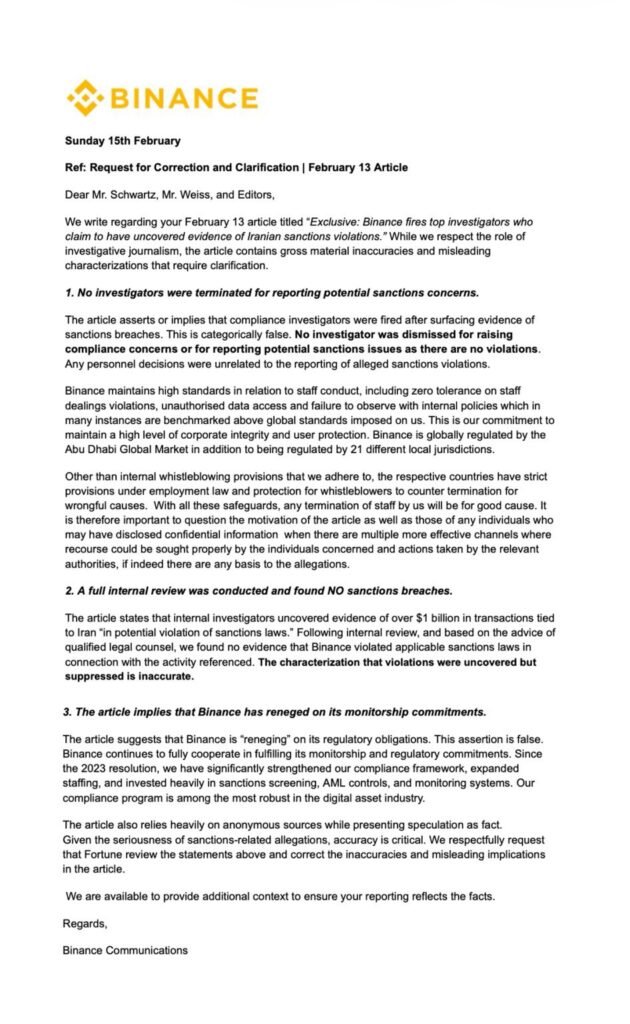
Binance has firmly denied the allegations, calling recent media coverage inaccurate and misleading. A company spokesperson said the exchange actively flags suspicious activity and has significantly strengthened its compliance framework over the past several years.
The spokesperson maintained that Binance does not permit Iranian users on its platform and that it reports questionable transactions to relevant authorities. The company also pushed back against claims that it processed over $1 billion in Iran linked transfers, disputing figures cited in earlier reports.
Richard Teng criticized the Wall Street Journal article alleging $1.7 billion in Iran related transactions, describing it as defamatory and demanding a retraction. In a blog post earlier this week, Binance said it has sharply reduced its exposure to sanctioned and high risk jurisdictions. According to the exchange, such exposure has dropped by roughly 97 percent since January 2024 and now accounts for about 0.009 percent of its total trading volume.
The company argues that it has undergone one of the most extensive compliance overhauls in the crypto industry and that it is committed to meeting regulatory expectations worldwide.
Shadow of the 2023 US Settlement
The new probe unfolds against the backdrop of Binance’s 2023 settlement with US authorities. In that case, the exchange agreed to pay $4.3 billion to resolve charges related to anti money laundering and sanctions violations.
As part of the settlement, Binance founder Changpeng Zhao stepped down as chief executive and later served a four month prison sentence. The company also agreed to operate under external monitoring and pledged to improve its compliance systems.
Blumenthal suggested that the latest allegations could call into question Binance’s adherence to the terms of that agreement. If proven accurate, the reported transactions may indicate weaknesses in the exchange’s current safeguards or gaps in enforcement.
The Senate subcommittee’s investigation is likely to examine whether Binance’s compliance transformation has been effective in practice and whether its monitoring mechanisms are sufficient to prevent transactions involving sanctioned entities.
Growing Scrutiny of Crypto Exchanges
The inquiry reflects broader concerns in Washington about the role of cryptocurrency platforms in facilitating cross border transactions that may bypass traditional financial oversight. Lawmakers have increasingly focused on whether exchanges are doing enough to detect and block activity tied to sanctioned governments, terrorist organizations and illicit networks.
For Binance, the outcome of this probe could have significant implications. The exchange remains one of the largest crypto trading platforms in the world, and its efforts to rebuild trust after the 2023 settlement are still ongoing.
With a March 6 deadline set for document production, attention will now turn to how Binance responds and whether additional regulatory or legal action follows. The case adds another chapter to the continuing debate over how digital asset platforms should be regulated and monitored in an era of heightened geopolitical tensions.