




















































































Regulator Signals Openness to Digital Assets
The UK Gambling Commission is considering whether cryptocurrency could be permitted as a payment method for licensed online gambling platforms in Great Britain. The move comes as the United Kingdom prepares to introduce a broader regulatory framework for digital assets under the Financial Conduct Authority.
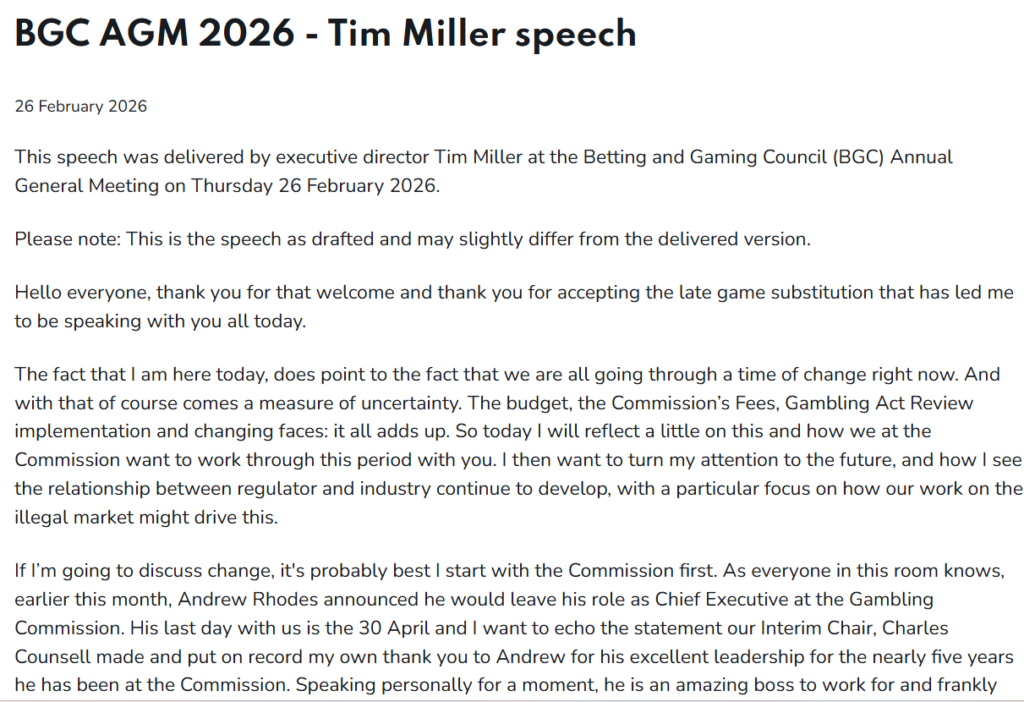
Tim Miller, Executive Director for Research and Policy at the Gambling Commission, said the regulator wants to examine the possible route for allowing cryptoassets to be used by consumers placing bets with licensed operators. He made the remarks during the annual general meeting of the Betting and Gaming Council in London, according to his published speech.
Miller noted that interest in crypto payments is growing among bettors. This, combined with the UK’s upcoming crypto regulatory regime, has prompted the Commission to begin assessing how such a system might work within existing gambling safeguards.
FCA Authorization to Be Mandatory
Any gambling operator or crypto firm involved in regulated crypto activity would need authorization from the Financial Conduct Authority under the Financial Services and Markets Act 2000 once the new regime comes into force.
Miller stressed that compliance with the FCA framework would be essential. The Gambling Commission is not proposing a free pass for digital assets. Instead, crypto payments would only be allowed within a tightly supervised environment, subject to financial crime controls and consumer protection standards.
The FCA has already outlined plans for its future crypto licensing structure. Earlier this year, the regulator published a final consultation detailing 10 proposals covering crypto markets. It aims to complete the process by March, with full implementation targeted for October 2027.
Companies will be required to apply for full authorization before the regime goes live on Oct. 25, 2027. The FCA has indicated that the application window is expected to open in September 2026. Crypto asset service providers that fail to apply during this period may fall under transitional arrangements, which would allow them to maintain existing services but prevent the launch of new products.
Industry Forum Asked to Map the Way Forward
Rather than imposing immediate changes, the Gambling Commission has asked its Industry Forum to explore practical options for integrating crypto payments into the regulated gambling sector. The advisory group represents workers and stakeholders across the gambling industry.
Miller did not set a deadline for the Forum’s recommendations. However, he made clear that the Commission wants a structured and evidence based approach before taking any formal steps.
The objective is to understand how crypto payments could operate without weakening affordability checks, anti money laundering safeguards, and customer suitability requirements that licensed operators must already follow.
Consumer Protection and Illegal Markets
One of the key drivers behind the discussion is the growth of unlicensed gambling websites that accept cryptocurrency. According to research cited by Miller, crypto is among the two most common search terms leading British gamblers to illegal sites.
The Commission believes that allowing regulated operators to accept crypto could reduce the appeal of offshore platforms that operate outside UK oversight. By providing a legal and supervised alternative, regulators hope to limit consumer exposure to unsafe environments.
However, Miller cautioned that introducing crypto as a payment option does not mean relaxing existing rules. Operators would still be required to carry out strict affordability and suitability checks. If a customer cannot pass those checks, access to gambling services would remain restricted regardless of the payment method used.
Long Road Before Any Rollout
While the Commission has signaled interest, any practical rollout remains several steps away. The crypto regulatory framework under the FCA must first be finalized and implemented. Only then could gambling operators and crypto service providers seek the necessary approvals.
The timeline set by the FCA suggests that the earliest widespread implementation would likely occur after October 2027. Until then, discussions between regulators, industry groups, and policymakers are expected to continue.
For now, the UK Gambling Commission’s stance reflects a cautious but pragmatic approach. With digital assets becoming more mainstream and increasingly intertwined with online activity, regulators are weighing how to incorporate them without compromising oversight or consumer protection.