



















































































Seed Phrase Published in Official Release
South Korea’s National Tax Service found itself at the center of a costly mistake after it reportedly disclosed a cryptocurrency wallet seed phrase in an official press release. The error led to the rapid transfer of 4 million PRTG tokens, valued at approximately $4.8 million, out of a wallet connected to assets seized during a tax enforcement campaign.
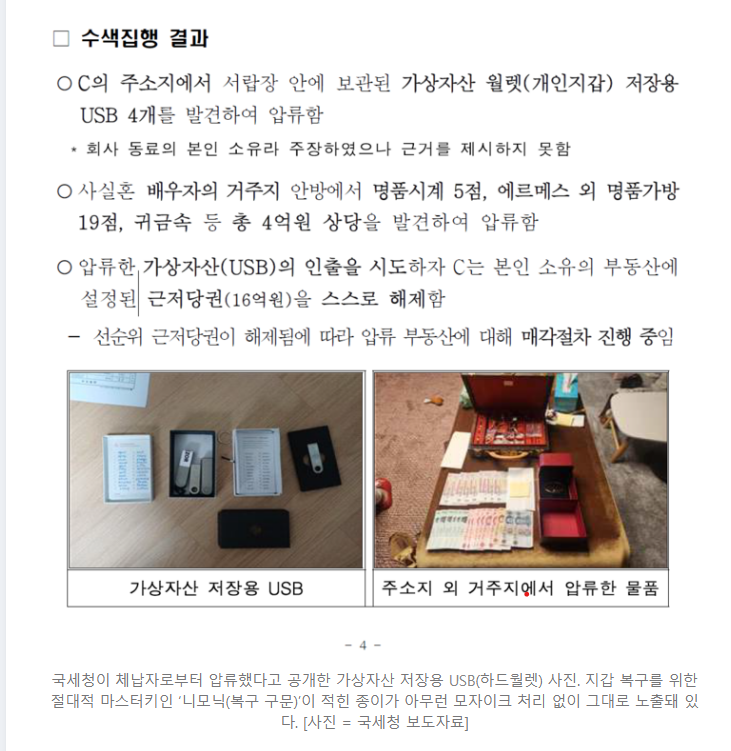
According to several local media outlets, including Naver and Chosun, the press release detailed the agency’s crackdown on tax delinquents and the confiscation of digital assets. The document allegedly included a photograph of a Ledger cold wallet placed next to a sheet of paper displaying the wallet’s full mnemonic phrase. The phrase was not blurred or masked, making it visible to anyone who viewed the image.
In cryptocurrency systems, a mnemonic or seed phrase acts as the master key to a wallet. Anyone with access to the phrase can take full control of the funds stored within it.
Tokens Moved Within Hours
Blockchain analysts soon traced activity linked to the exposed wallet. Researchers identified an Ethereum address associated with the leaked seed phrase. Onchain data showed three inbound transfers totaling 4 million PRTG tokens, followed by a single outbound transaction that transferred the entire balance to another address.
The speed and precision of the transaction strongly suggested that someone had immediately used the published mnemonic phrase to access and move the funds.
Jaewoo Cho, associate professor at Hansung University’s Blockchain Research Center, reviewed the wallet activity and confirmed the outflow. In a post on X, he stated that 4 million PRTG tokens worth around $4.8 million had been taken after the mnemonic was revealed through the National Tax Service’s press release.
Cho noted that other exposed mnemonics in the release did not appear to pose significant additional risks. He also suggested that the stolen tokens could be difficult to liquidate, potentially limiting the actual financial damage. Even so, the loss has raised serious questions about how digital assets are handled by public institutions.
Custody Practices Under Scrutiny
The episode has intensified scrutiny of how South Korean authorities manage seized cryptocurrency. Secure custody of digital assets requires strict operational controls, including offline storage procedures and careful handling of seed phrases. Publishing such sensitive information in an official document represents a basic security lapse.
Cho expressed hope that the incident would serve as a wake up call for public agencies to develop more reliable virtual asset custody systems. As digital assets become more common in enforcement actions, the need for trained personnel and standardized procedures has grown more urgent.
Government bodies increasingly hold cryptocurrencies as part of tax seizures, criminal investigations and asset forfeitures. Each case introduces new operational challenges, especially for agencies that may lack technical expertise in blockchain security.
Another Missing Crypto Case Emerges
The tax office incident is not the only recent custody failure involving Korean authorities. In February 2026, police revealed that 22 Bitcoin seized in a 2021 hacking investigation had disappeared from a cold wallet stored in a police vault in Gangnam.
Investigators later arrested two suspects after discovering that the coins had been transferred using a mnemonic phrase that the police had never actually controlled. The case raised doubts about the procedures used to secure confiscated digital assets and whether clear documentation and access controls were in place.
With Bitcoin trading at over $66,000 at the time, the missing 22 coins represented a substantial loss and further fueled public concern about digital asset oversight.
Mounting Pressure on Regulators
Regulators are also facing criticism on another front. Cryptocurrency exchange Bithumb recently made headlines after a system error briefly credited users with 620,000 Bitcoin that did not exist, an amount valued at about $43 billion at prevailing prices. The mistake, described as a fat finger error, prompted questions about internal controls and system safeguards.
South Korea’s Financial Services Commission has extended its investigation into the exchange following criticism that earlier warnings about potential system weaknesses were not adequately addressed.
Taken together, the National Tax Service leak, the missing Bitcoin case, and the exchange error paint a troubling picture of digital asset management challenges across both public and private sectors in South Korea.
As authorities continue to embrace blockchain based enforcement and regulation, the latest breach highlights the consequences of basic security oversights. In the world of cryptocurrency, a single exposed seed phrase can undo months of enforcement work in minutes.