

Russia Pushes for Mining Transparency Amid Widespread Non-Compliance
Despite introducing new regulations in late 2024, the Russian government has so far failed to bring the majority of its crypto mining industry into the legal fold. According to Finance Ministry official Ivan Chebeskov, only 30% of the country’s crypto miners have registered with the Federal Tax Service, leaving 70% still operating underground.
The government began enforcing two mining-related laws in October and November 2024. These laws provided legal definitions for mining operations and required miners to register their businesses. However, many companies continue to avoid compliance, casting doubt on the effectiveness of the current legislative approach.
“When introducing mining regulations, our general approach was to bring this industry out of the shadows as much as possible. We have not yet completed this process,” Chebeskov stated, as reported by local news outlet TASS.
Authorities Consider Tougher Penalties
Although Chebeskov did not outline any immediate strategies to increase compliance, he indicated that authorities are committed to addressing the issue.
“We will work to complete this process,” he said, implying that further efforts are underway to ensure wider registration of mining firms.
In line with this, earlier reports suggest Russia may introduce harsher penalties for unregistered miners. On June 9, Forbes Russia reported that the Ministry of Digital Development is drafting a bill to increase fines for illegal mining operations from 200,000 rubles (approximately $2,550) to 2 million rubles (about $25,500).
Crackdown on Illegal Operations Intensifies
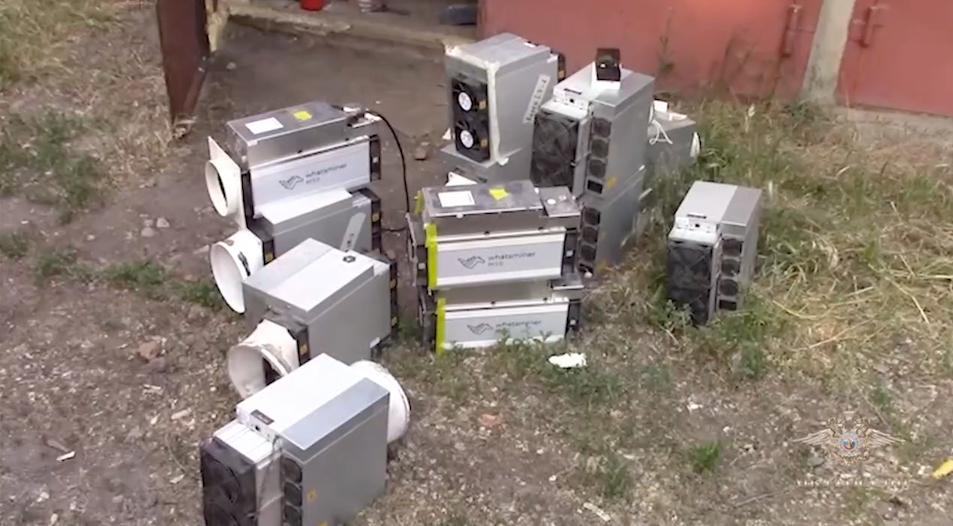
The Russian government is also stepping up enforcement actions. On the same day as Chebeskov’s remarks, the Ministry of Internal Affairs reported the dismantling of an illegal mining farm in the Rostov region. The facility was discovered in a garage complex in the city of Bataysk, where police seized 13 mining machines.
A criminal case has been opened under Article 165 of Russia’s Criminal Code, which pertains to property damage resulting from illegal activity.

Just a week earlier, authorities had uncovered another illicit mining operation concealed within a truck in the Pribaikalsky region. The truck had been illegally siphoning electricity from a nearby village, illustrating the lengths to which some operators go to avoid detection and taxation.
Mixed Reactions to the Legal Framework
Since their implementation, Russia’s crypto mining laws have faced criticism from industry observers and legal experts. Many argue that the laws lack clarity and fail to offer full legal status to mining operations.
Nikita Zuborev, chief analyst at BestChange, noted that the laws merely lay the groundwork for taxation without offering a comprehensive regulatory framework. “No new clear regulations are introduced; it only paves the ground for more precise taxation,” he said.
Some legal professionals have also pointed out restrictive elements of the new legislation. These include bans on foreign individuals engaging in crypto mining within Russia and limitations in certain regions of the country.
Industry Resilience and Growing International Interest
Despite the regulatory challenges, Russia’s crypto mining industry continues to thrive. Vyacheslav Kopylov of local mining firm Prostomining highlighted that the ability for legal entities to list mining equipment as business assets and pay taxes was a significant step forward.
“The adoption of new laws in November that allow legal entities to put mining equipment on their balance sheets and pay taxes is an important step for the industry,” he said.

Russia’s Blockchain Forum has also seen increased participation from mining-related businesses, with major booths now dominated by companies offering end-to-end services, from data centre construction to equipment maintenance.
International interest, particularly from China, has surged due to Russia’s relatively low energy costs. The chief operating officer of Hotcoin noted a growing presence of Chinese mining firms in Russia, citing both economic benefits and strong diplomatic ties between the two countries.
“I saw a lot of Chinese who would like to invest in this sector in Russia,” he said. “Not only because of the friendly relationship between Russia and China, but also because of the adequate and cheaper energy in Russia.”
He added that more Chinese companies are expected to enter the Russian crypto mining market in the near future.
Outlook
As Russia continues its push for greater regulatory oversight of the crypto mining sector, the success of its strategy will largely depend on whether new penalties and enforcement actions can compel widespread compliance. While the industry appears to be growing regardless of legal uncertainties, the government faces an uphill battle in bringing the remaining 70% of miners into the formal economy.