
















































































Shares of crypto-focused firms moved in opposite directions on Tuesday, with Hong Kong’s QMMM Holdings skyrocketing after unveiling a blockchain and AI strategy, while Canada’s Sol Strategies tumbled in its Nasdaq debut. The sharp split reflects the uneven performance of publicly traded companies betting heavily on digital asset treasuries.
QMMM Bets on Blockchain and AI
QMMM Holdings, originally a digital media and virtual apparel company, stunned markets with its plan to pivot aggressively into blockchain and artificial intelligence.
The company announced it would establish a $100 million cryptocurrency treasury, allocating funds to Bitcoin (BTC), Ethereum (ETH) and Solana (SOL). Alongside this, QMMM is building AI-driven tools to support cryptocurrency analytics, decentralised data markets, automated treasury management and Web3 development.
CEO Bun Kwai described the shift as part of a vision to create a “crypto-autonomous ecosystem” merging AI and blockchain. The strategy, he said, could position QMMM as a hub for decentralised finance, AI-powered crypto insights and digital infrastructure.
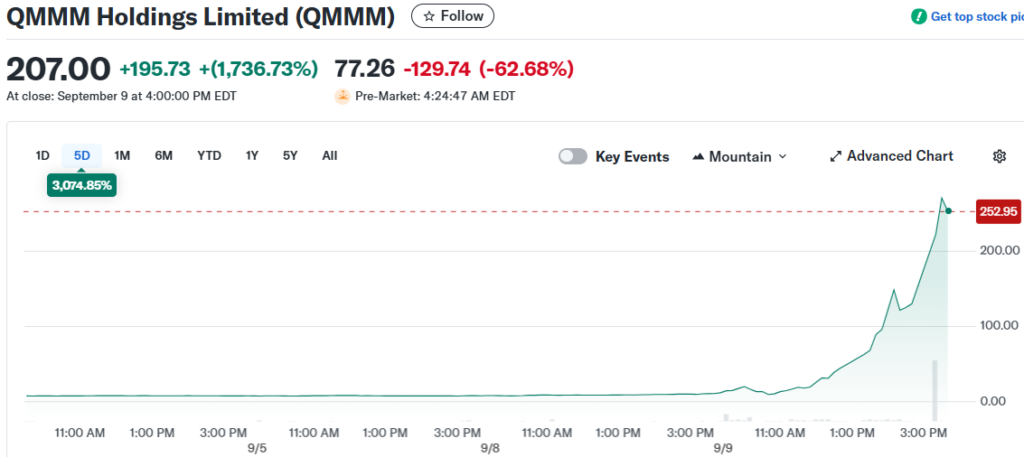
Investors responded with enthusiasm. QMMM shares surged more than 2,100% intraday before closing Nasdaq trading up 1,737%, marking one of the most dramatic single-day moves for a crypto-linked stock this year.
Sol Strategies’ Rocky Nasdaq Debut
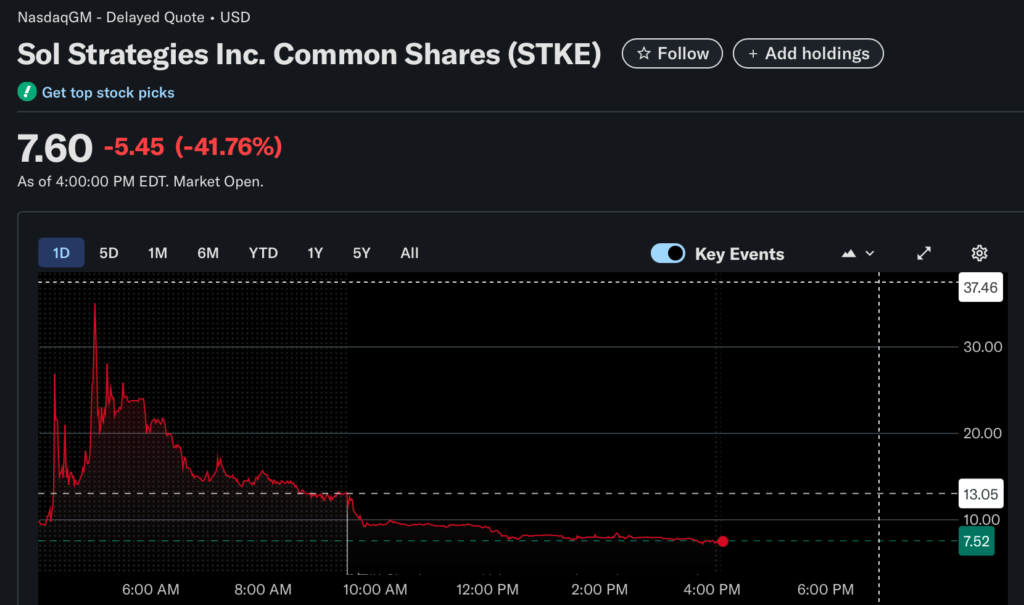
While QMMM grabbed headlines with its meteoric rise, Sol Strategies faced the opposite outcome. The Canadian firm, focused on Solana staking and treasury management, saw its Nasdaq-listed shares plunge 42% on their first day of trading.
The company fared slightly better on the Canadian Securities Exchange, but even there, shares fell 16%. CEO Leah Wald remained focused on long-term execution, stating that Sol Strategies’ DAT++ model would drive growth despite market volatility.
“While share prices can fluctuate, our approach centres on disciplined execution of our business strategy,” Wald told Cointelegraph.
In its most recent earnings, Sol Strategies reported a Q2 net loss of $3.5 million but highlighted growth in validator and staking revenues. The company also revealed it had shifted parts of its Bitcoin holdings into Solana and Sui tokens.
Mixed Fortunes for Crypto Treasury Firms
The performance of QMMM and Sol Strategies underscores broader volatility among publicly listed companies with crypto-heavy balance sheets.
- Upexi, a Solana treasury company, saw its share price slip 2.1% in the past month.
- DeFi Development Corp., also tied to Solana, gained 13.2% over the same period.
- Japan’s Metaplanet, which continues to aggressively buy Bitcoin, is down 37% in the last 30 days despite shareholder approval for further crypto accumulation.
- Strategy, another early mover in crypto treasuries, has dropped 18% in the past month.
This divergence highlights how investor sentiment around treasury-focused crypto firms remains highly unstable, with price swings often disconnected from fundamentals.
Institutional Interest Keeps Growing
Despite volatility, QMMM’s ambitious plan reflects a wider institutional trend. Companies are increasingly exploring crypto treasuries and blockchain strategies as regulatory clarity improves and digital assets gain mainstream traction.
Notable examples include:
- MicroStrategy, which has invested billions into Bitcoin.
- HashKey Group in Hong Kong, which recently launched a $500 million digital asset fund focused on Bitcoin and Ethereum.
QMMM’s pivot is the latest sign that firms are willing to reinvent themselves around crypto and AI, betting on long-term transformation.
Looking Ahead
For QMMM, the challenge now lies in execution. Building AI-integrated blockchain tools, scaling a $100 million crypto treasury and navigating regulatory hurdles will require significant resources.
Investors will watch closely to see whether the company can turn its bold promises into sustainable revenue. Meanwhile, Sol Strategies faces the task of rebuilding confidence after its bruising Nasdaq debut.
The sharp divergence between the two firms offers a reminder: while crypto-linked strategies can unlock explosive growth, they can also expose companies to extreme risks and market volatility.