



















































































The memecoin market has ended the year on a subdued note, a sharp contrast to the festive surge seen just twelve months ago. Once driven by retail enthusiasm and viral narratives, the sector is now grappling with weaker liquidity, falling participation and a clear shift in investor risk appetite.
Data from CoinMarketCap shows that memecoins have lost roughly 65 percent of their value over the past year, shrinking to a combined market capitalization of about 35 billion dollars on Dec. 19. Although the sector saw a modest rebound toward 36 billion dollars later in the week, prices remain near their lowest levels of 2025. This marks a dramatic reversal from Christmas 2024, when memecoins were riding high at nearly 100 billion dollars in valuation.
From Christmas rally to year-end slump
Memecoins were among the strongest performers during the 2024 holiday season, benefiting from thin liquidity, aggressive speculation and strong retail participation. Tokens inspired by internet culture and social media trends surged as traders chased short-term gains, turning the sector into one of crypto’s most active corners.
That momentum has not carried into 2025. Instead, the year has been defined by steady outflows and declining interest. As prices slid, many retail traders stepped back, unwilling to deploy capital into assets that offered little beyond hype. By December, memecoins were trading close to year-end lows, reflecting a broader cooling in speculative behavior across the crypto market.
Liquidity dries up as volumes fall sharply
The pullback is not limited to price alone. Trading activity across memecoin markets has also dropped significantly. CoinMarketCap data indicates that total trading volume in the sector fell by 72 percent over the year, declining to around 3.05 trillion dollars.
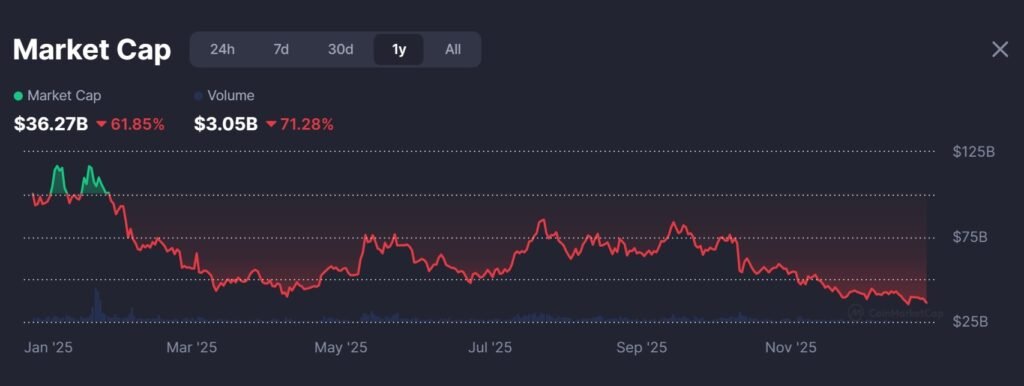
Lower volumes suggest fewer active traders and reduced short-term interest. In previous cycles, memecoins thrived on constant turnover, with rapid inflows and outflows fueling price swings. This year, that churn has faded. Capital has instead moved toward assets perceived as more stable or fundamentally driven, leaving highly speculative tokens struggling to attract attention.
Market participants often view memecoins as a gauge of retail risk appetite. When enthusiasm is high, these tokens tend to outperform. When caution sets in, they are usually the first to suffer. The sharp contraction in both market cap and volume points to a more defensive mindset among traders as the year closes.
Politics and speculation fuelled the boom
One of the defining features of the memecoin rally in 2024 was the influence of political narratives. According to CoinGecko, excitement around the US presidential election played a major role in pushing memecoin valuations to record highs. Election themed tokens flooded social media platforms, token launchpads and onchain ecosystems, drawing in traders eager to speculate on viral political themes.
These tokens turned political developments into tradeable narratives, blurring the line between satire, speculation and activism. For a time, the strategy worked. Memecoins tied to political figures or slogans captured outsized attention and capital, helping the sector reach its peak during the year-end holidays.
Confidence erodes after high-profile launches
The same political momentum that fueled the rise also contributed to the downturn. As 2025 unfolded, several high-profile launches tied to public figures became flashpoints for controversy. Tokens associated with US President Donald Trump and Argentina President Javier Milei drew intense scrutiny after sharp price drops and allegations of insider activity.
CoinGecko noted that these events marked a turning point for sentiment. Rapid collapses following heavily promoted launches left many traders nursing losses, while reports of early holders exiting positions damaged trust. The result was a shift from excitement to skepticism, with investors questioning the long-term value and fairness of such projects.
As confidence waned, new launches struggled to gain traction, and existing tokens saw reduced engagement. The memecoin market, once buoyed by constant novelty, began to feel saturated and fragile.
NFTs mirror the speculative downturn
Memecoins were not alone in facing pressure. Non-fungible tokens, another sector closely tied to speculative cycles, also hit fresh lows in December. CoinGecko data shows that NFT market capitalization fell to around 2.5 billion dollars, its lowest point of 2025.
This decline mirrors the broader retreat from high-risk digital assets. NFTs had peaked near 9.2 billion dollars in January before sliding roughly 72 percent over the year, a drop comparable to that seen in memecoins. Activity levels have followed a similar path. According to CryptoSlam, the number of weekly NFT sellers fell below 100,000 for the first time since April 2021, highlighting how far participation has receded.
A cautious close to the year
The downturn in memecoins and NFTs underscores a broader shift within the crypto market. Retail traders, once eager to chase viral trends, appear more selective as liquidity tightens and narratives lose their pull. While speculative assets may regain attention in future cycles, the close of this year suggests that enthusiasm alone is no longer enough to sustain valuations.
For now, memecoins have moved from holiday cheer to a colder reality, ending the year as a reminder of how quickly sentiment can change in crypto markets.