





















































































The Central Board of Direct Taxes (CBDT) in India has intensified its crackdown on tax evasion in the crypto sector. The authority is now actively investigating individuals and businesses who may have failed to report income generated through digital assets like cryptocurrencies. This comes as the country tightens its grip on virtual digital asset (VDA) compliance, aiming to bring transparency and accountability to a fast-growing but largely unregulated space.
CBDT Flags Unreported Crypto Income
The CBDT has announced that it is investigating potential cases of tax evasion and money laundering linked to digital assets. This includes high-risk investments in cryptocurrencies that are not disclosed properly under the Income Tax Act, 1961. The focus is on individuals and entities that either didn’t report their income from crypto transactions or wrongly filed their tax returns.
The law mandates that income from the transfer of VDAs is taxed at a flat 30% rate under Section 115BBH of the Income Tax Act. This provision, introduced in the 2022 Finance Act, also bars any deductions except for the cost of acquisition. Notably, losses incurred in VDA trading cannot be set off against any other income or carried forward to future years.
Despite this, the CBDT has noticed widespread non-compliance with the rules, leading to what it calls a “nationwide scrutiny” of unaccounted crypto earnings.
Discrepancies Trigger Nationwide Probe
The CBDT’s investigation has been fuelled by mismatches in data collected from two sources, the Income Tax Returns (ITRs) filed by taxpayers and the Tax Deducted at Source (TDS) data submitted by Virtual Asset Service Providers (VASPs), commonly known as crypto exchanges.

These discrepancies have raised red flags, prompting the department to classify several individuals and companies as “high-risk defaulters.” Many taxpayers reportedly either omitted details of crypto gains from their ITR or paid taxes at incorrect rates while wrongfully claiming benefits like cost indexation, which does not apply to crypto transactions.
By analysing data submitted by crypto exchanges, the CBDT has been able to flag potential non-compliance and is now actively reaching out to those affected.
Thousands Alerted: NUDGE Notices Sent
Over the past few weeks, thousands of crypto traders and firms have received alerts from the CBDT. These notices are part of the department’s NUDGE programme, a non-intrusive initiative encouraging voluntary compliance. The campaign, operating under the motto “Trust Taxpayers First,” nudges individuals to correct their filings without immediate penalties.

This is the third NUDGE campaign in just six months. Previous drives targeted unreported foreign assets and false deductions under Section 80GGC. The current focus on digital assets marks a significant step in India’s tax compliance strategy for the crypto space.
Taxpayers who receive these notices are being asked to revisit their filings and ensure that all crypto-related income is accurately reported. Failure to respond or comply could result in further verification or scrutiny under Indian tax laws.
RBI Reiterates Caution on Crypto
As the CBDT tightens enforcement, the Reserve Bank of India (RBI) has also reiterated its caution regarding cryptocurrencies. RBI governor Sanjay Malhotra recently reaffirmed the bank’s stance, warning that digital assets could pose risks to financial stability and monetary policy.
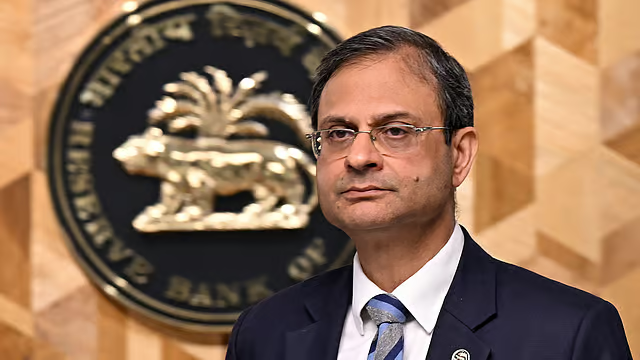
Speaking after the Supreme Court’s suggestion to examine crypto regulations, Malhotra said that a government committee is actively reviewing the issue. He added that while crypto adoption is growing, the risks, especially related to capital flight, illicit financing, and market volatility remain significant.
The CBDT’s aggressive stance signals a new era of oversight for the Indian crypto ecosystem. While the country hasn’t banned crypto trading, the focus is now on ensuring full tax compliance and plugging loopholes that allow for unaccounted income.