


















































































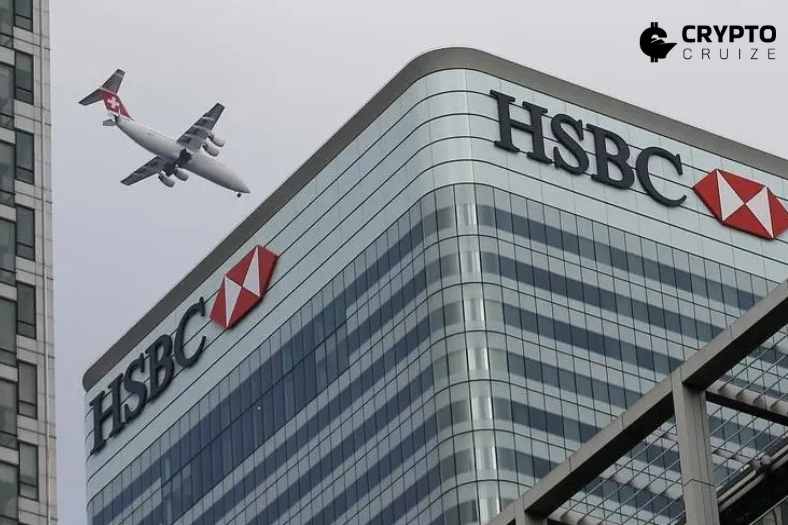
HSBC is preparing to expand its tokenised deposit services to the United States and the United Arab Emirates in 2026 as global financial institutions accelerate their push into blockchain-based money. The move signals the bank’s growing commitment to tokenisation at a time when major players are exploring alternatives to traditional stablecoins.
HSBC Expands Its Blockchain Strategy
HSBC Holdings will begin offering tokenised deposits to corporate clients in the US and UAE during the first half of 2026, according to a Bloomberg report. The Tokenised Deposit Service, known as TDS, allows clients to move money instantly across borders at any time of day.

Manish Kohli, HSBC’s global head of payment solutions, said tokenisation and digital money are gaining rapid momentum across the financial sector. He noted that the bank is placing significant focus on the technology to meet rising demand.
How Tokenised Deposits Differ from Stablecoins
Tokenised deposits are digital versions of bank deposits that sit on a blockchain but remain backed by a regulated bank’s balance sheet. The model enables fast transfers and programmable features without moving outside the traditional banking system.
Stablecoins are usually linked to a fiat currency such as the US dollar and backed by assets like government securities. They are issued by private companies that are often restricted from paying interest.
HSBC sees tokenised deposits as a more robust alternative. They allow interest payouts and can be used within regulated banking frameworks. Kohli said the bank plans to expand use cases linked to programmable payments and autonomous treasury systems. These systems can use automation and AI to help companies manage liquidity.
Rising Corporate Interest in Treasury Innovation
Kohli said treasury transformation is now a priority for many large companies. Businesses are increasingly looking for tools that improve speed and efficiency in cash management. Tokenised deposits are emerging as one of the solutions that can offer both.
HSBC’s expansion follows the service’s launch in Hong Kong in May, where Ant International became the first client to use the platform. The bank has since rolled it out in Singapore, the UK and Luxembourg as part of a broader strategy to modernise its payments infrastructure.
Competitive Pressure from Global Banks
HSBC’s move comes as other major institutions also increase investment in tokenisation. JPMorgan recently introduced JPM Coin, a deposit token backed by US dollar reserves at the bank. The company has positioned JPM Coin as a regulated alternative to traditional stablecoins.

Naveen Mallela, who leads JPMorgan’s blockchain division, has stressed that deposit tokens operate securely within established banking guidelines. This structure may appeal to institutions that are cautious about stablecoins issued by non-bank entities.
HSBC Still Open to Launching Its Own Stablecoin
Although HSBC is prioritising tokenised deposits, it has not ruled out creating a stablecoin in future. Kohli said the bank remains open to the idea but would need clearer legal frameworks before moving ahead. HSBC aims to ensure any digital money product aligns fully with regulatory expectations in each of its markets.