


















































































Google has taken a bold step into the Bitcoin mining world by becoming the largest shareholder of TeraWulf, a U.S.-based Bitcoin miner that is shifting its focus towards artificial intelligence (AI) and high-performance computing. The move, structured through a $3.2 billion financial backstop, highlights the growing convergence between energy-intensive Bitcoin mining and the booming demand for AI infrastructure.
Google Becomes TeraWulf’s Top Investor
Through warrant agreements linked to a colocation lease deal, Google has secured the right to purchase more than 73 million shares in TeraWulf. This gives the tech giant a 14% ownership stake, making it the company’s largest shareholder.
The backstop arrangement underpins a 10-year data centre lease between AI infrastructure provider Fluidstack and TeraWulf. Essentially, Google has guaranteed that if Fluidstack fails to meet its lease obligations, it will step in with up to $3.2 billion in funding. In return, it gains a substantial equity position in the miner.

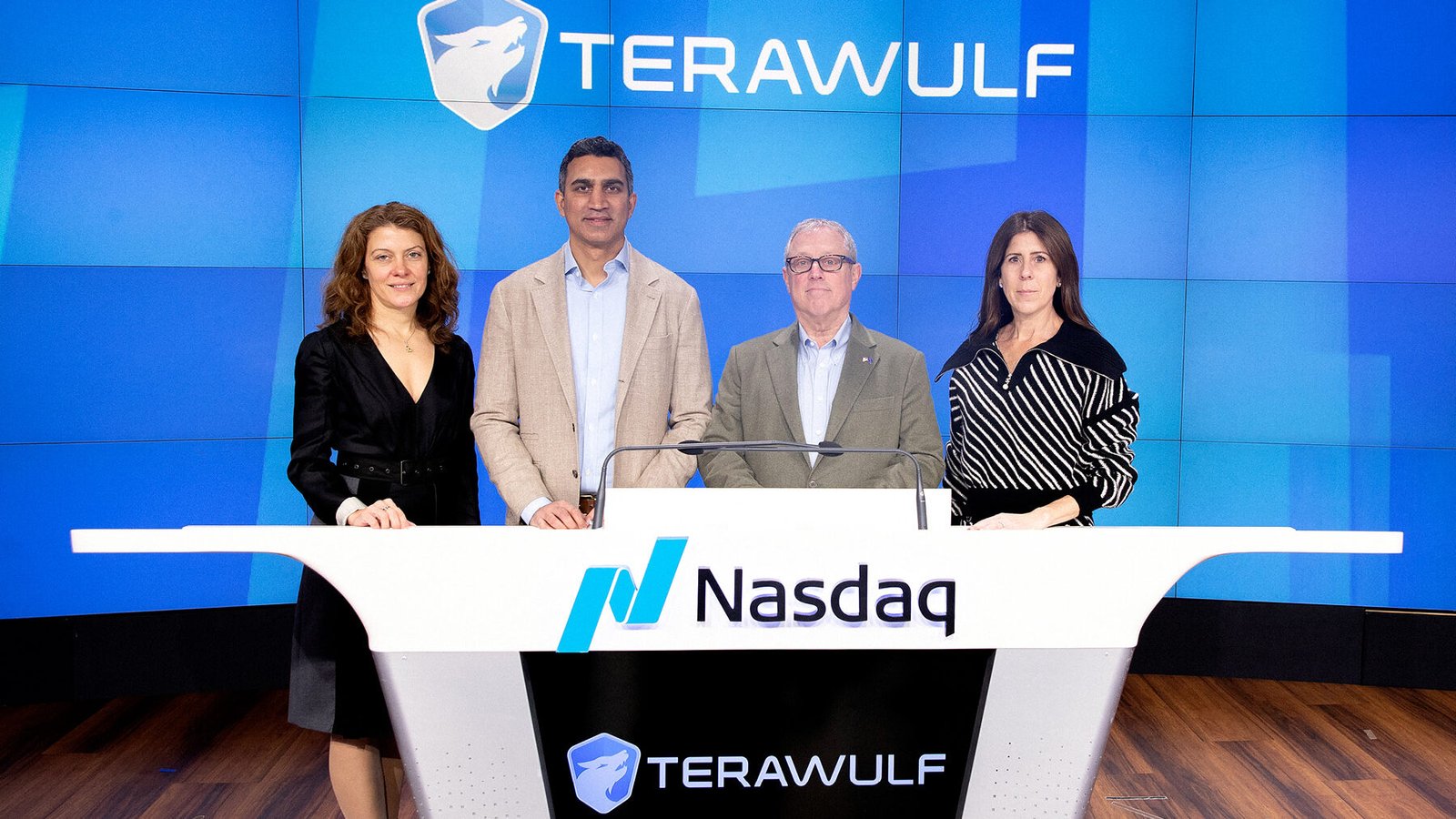
According to TeraWulf’s chief strategy officer Kerri Langlais, the deal represents a strong endorsement: “Google’s investment provides powerful validation from one of the world’s leading technology companies.” She added that the backstop recognises TeraWulf’s zero-carbon energy strategy as a key strength.
Expanding the Lake Mariner Campus
The partnership centres on TeraWulf’s flagship Lake Mariner data centre campus in New York. Fluidstack has already committed to expanding its presence there by building a new data centre facility, CB-5, with 160 megawatts of critical IT load capacity.

Construction of CB-5 is expected to complete in the second half of 2026, further boosting the Lake Mariner site’s scale. TeraWulf CEO Paul Prager said the expansion shows the “strategic alignment” between the company and Google, noting that the backstop funding helps ensure delivery at scale for partners and shareholders.
The deal also underscores the financial significance for TeraWulf. Lease revenues from the Fluidstack contract are projected to generate $6.7 billion, with the potential to climb as high as $16 billion if extensions are exercised over the full term.
Shifting from Bitcoin Mining to AI Workloads
While TeraWulf made its name as a Bitcoin miner, the company is gradually steering towards AI and high-performance computing. The backstop arrangement applies only to these workloads and does not cover TeraWulf’s corporate debt or mining operations.
The shift reflects wider industry changes since the April 2024 Bitcoin halving, which cut mining rewards to 3.125 BTC per block. This has made traditional mining less profitable and increased the appeal of diversifying into AI-driven data centre services.
TeraWulf has confirmed it will maintain its existing mining operations at Lake Mariner, which provide cash flow and grid support through flexible energy use. However, it will not pursue expansion in this area, instead prioritising delivery for its AI partners.
A recent analysis by asset manager VanEck suggests this is a lucrative pivot. It estimated that public mining firms could add $13.9 billion in profits over 13 years by diverting just 20% of their capacity to AI and high-performance computing by 2027.
Market Response and Outlook
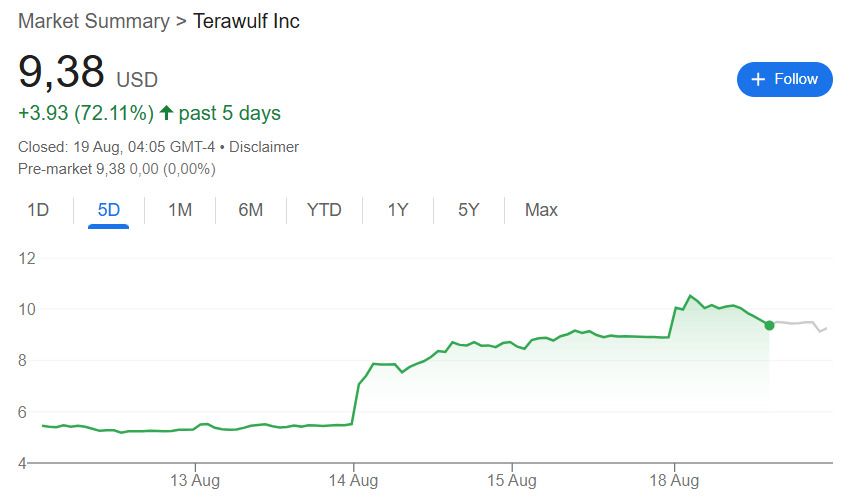
The market has already responded to Google’s backing. TeraWulf shares jumped as high as $10.57 following the announcement, a 17% intraday surge from the previous close of $8.97. Although the stock later settled at $9.38 and dipped slightly in after-hours trading, it has gained more than 70% over just five days.
For Google, the investment aligns with its need to secure sustainable, large-scale data centre capacity for AI applications. For TeraWulf, the partnership provides not only a financial safety net but also global recognition of its role as a green energy-powered infrastructure provider.
With CB-5 scheduled to go live in 2026 and billions in lease revenues projected, TeraWulf is positioning itself at the crossroads of crypto and AI. The deal marks a major vote of confidence in the future of data centres that can flex between Bitcoin mining and AI workloads, powered by zero-carbon energy.