



















































































In a world where cryptocurrency is reshaping traditional finance, a growing number of countries are now offering citizenship or long-term residency in exchange for crypto-funded investments. As of mid-2025, nations like Vanuatu, El Salvador, Portugal and Caribbean states such as Dominica and Saint Lucia are leading this trend, making it easier for Bitcoin and stablecoin holders to secure a second passport or golden visa.
Vanuatu: Speedy Citizenship with Crypto
Vanuatu remains one of the quickest and most accessible countries for acquiring a second passport, often within 30 to 60 days. Through its Development Support Program (DSP), individuals can make a donation starting from $130,000, with family packages going up to $180,000. Although the government does not take direct crypto payments, licensed agents accept assets like Bitcoin and stablecoins, convert them into fiat and manage the full application process.
No in-person visit, language test or residency is needed, making it ideal for digital nomads and crypto entrepreneurs. Dual citizenship is allowed, and successful applicants gain visa-free access to over 90 countries, although Schengen access is under review.
Caribbean Options: Dominica and Saint Lucia
Both Dominica and Saint Lucia offer fast-track citizenship under their respective Citizenship by Investment (CBI) schemes. Dominica requires a donation of $200,000 to its Economic Diversification Fund, while Saint Lucia offers options starting at $240,000, or $300,000 for real estate investments.
Licensed agencies now accept crypto, converting it into fiat before passing it on to the respective government. These schemes support remote applications with no physical presence required. The programs are family-friendly and offer visa-free travel to the EU, UK and much of Asia. However, applicants must pass strict due diligence checks, and some global scrutiny still lingers around Caribbean CBI passports.
Portugal: EU Residency Through Crypto-Linked Funds
Portugal continues to attract crypto-rich investors with its Golden Visa programme, which provides a path to EU residency and eventual citizenship. The typical investment stands at €500,000, now directed mainly towards regulated funds instead of real estate.
While the government does not take direct crypto payments, several investment funds focused on blockchain and digital assets provide indirect exposure. Some schemes offer tailored packages, such as a three-Bitcoin minimum investment, that meet official thresholds once converted to fiat. Portugal offers tax exemptions on long-term crypto gains, with minimal stay requirements and full family inclusion.
One caution is that the citizenship timeline, currently five years, may soon be extended to ten under pending legislation.
El Salvador: Citizenship for Bitcoin
El Salvador has made headlines again with its Freedom Visa, launched in December 2023. This crypto-native programme offers citizenship for a $1 million investment in Bitcoin or USDT, with the entire process handled through digital assets.
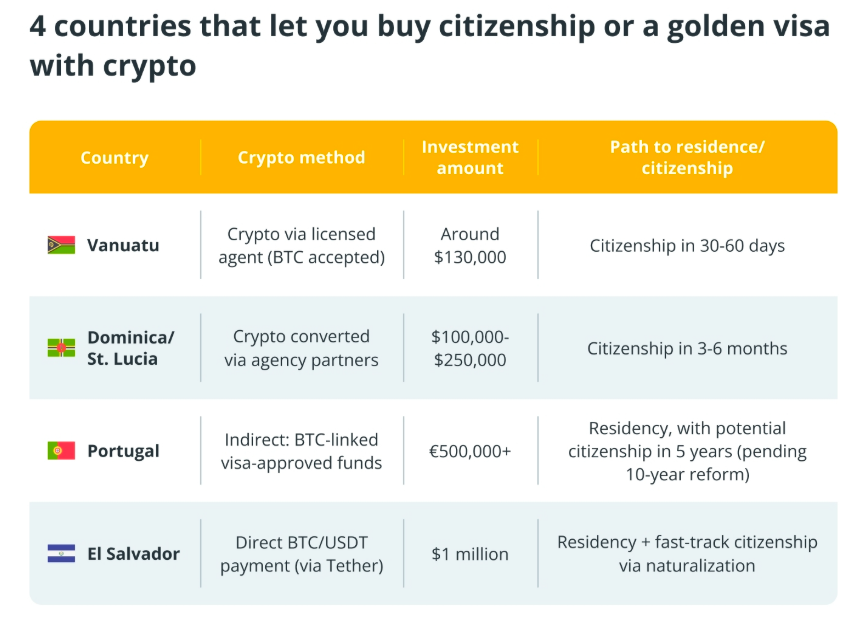
Applicants pay an initial $999 deposit, followed by the remaining amount upon approval. Managed in partnership with Tether, this initiative bypasses fiat entirely and provides a direct route to citizenship, typically granted within months. The offer is capped at 1,000 participants annually and includes family members. With no stay requirements, this programme appeals to crypto enthusiasts seeking full legal status without relocating.
Emerging Destinations: Kazakhstan and St. Kitts & Nevis
Kazakhstan joined the trend in May 2025 with a ten-year golden visa for a $300,000 investment in local companies or securities. Although it does not offer citizenship or accept direct crypto yet, the country is developing crypto-friendly regulations, including licensed crypto banks and national reserves.
St. Kitts & Nevis has started accepting crypto holdings as part of an applicant’s wealth declaration under its CBI scheme. While investments must still be made in fiat, this change enables crypto investors to qualify more easily, provided they submit detailed documentation and pass compliance checks.
Key Considerations for Crypto Migrants
While the opportunities are expanding, crypto-funded migration still comes with legal and regulatory complexities. Most governments demand source-of-funds documentation, full KYC/AML compliance and conversions to fiat through approved intermediaries. Caribbean programmes, in particular, involve detailed background checks.
Policy changes can also impact eligibility. Portugal’s possible extension of its naturalisation timeline is one such example. Experts recommend working with legal advisors familiar with both crypto and international residency law to avoid pitfalls.
From rapid second passports in Vanuatu and El Salvador to long-term European residency via Portugal’s crypto-linked funds, investors now have a range of global options tailored to their digital wealth.