





















































































The world of crypto trading, with its relentless 24/7 nature, is forcing traditional finance (TradFi) to evolve. Hedge funds and trading giants are increasingly hiring traders for weekends, recognising that the digital asset market does not rest, not for weekends, holidays, or closing bells.
Unlike traditional markets that operate on fixed schedules, the crypto market is always on, reacting to news, events, and volatility in real-time. This round-the-clock activity is compelling even the most conservative institutions to build infrastructures that can operate continuously.
Weekend Roles Become a Must-Have
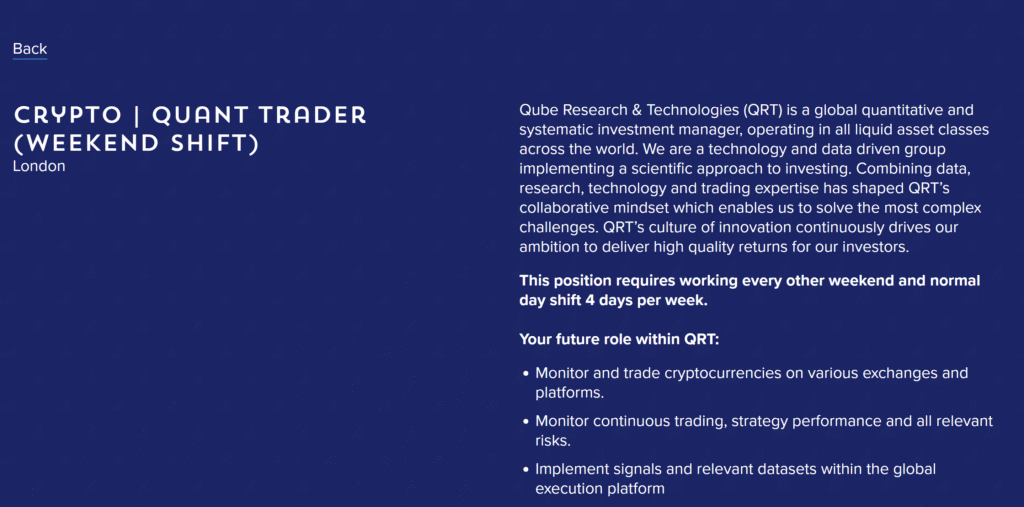
Firms like Qube Research & Technologies, Virtu Financial, and Jump Trading are quietly but steadily expanding their hiring to include weekend crypto traders. London-based Qube is currently hiring for a “Crypto | Quant Trader (Weekend Shift)” a position that includes alternate weekend coverage alongside a regular four-day workweek. The trader will be responsible for continuous monitoring of strategy performance, implementing data signals, and managing risk.
Virtu Financial, a major high-frequency trading firm, is looking for weekend traders in Singapore to manage crypto activities when traditional desks are closed. Similarly, Jump Trading’s crypto arm had advertised a weekend position in Chicago, indicating a growing need for global coverage.
These roles mark a shift in how financial institutions approach trading operations, adapting to the always-active digital asset ecosystem that never pauses for a weekend breather.
Hedge Funds Go All-In on Crypto Teams
The wave of institutional interest is more than just surface-level. Major hedge funds are investing heavily in dedicated crypto arms with extensive staffing and infrastructure.
Brevan Howard’s crypto unit, BH Digital, is leading the charge. The division now includes over 15 portfolio managers, more than 10 traders and data scientists, and around 20 external engineers. Their focus: designing systems and strategies robust enough to handle nonstop market activity.

Steve Cohen’s Point72 hedge fund is also stepping up its crypto presence. Its quant division, Cubist, is hiring a crypto-focused quantitative developer in Paris, another indication of European expansion in the crypto space.
According to a March report by CoinShares, hedge funds now dominate Bitcoin ETF holdings. Seven of the ten largest holders are hedge funds, who account for 41% of all 13-F Bitcoin ETF shares, overtaking investment advisers for the first time.
Weekend Volatility: Opportunity and Risk
The push to cover weekends isn’t just about staying competitive, it’s about risk management too. Crypto markets are notoriously volatile during weekends due to thinner liquidity and reduced institutional presence. Even minor news can trigger major sell-offs.
In April, Bitcoin dropped from $83,000 to $77,000 following a Friday announcement of tariffs by US President Donald Trump. With fewer traders online to absorb the shock, the market saw a 7% drop across the weekend.
Hacks and breaches are another threat. Malicious actors often time attacks for late Friday or Saturday when response teams are limited, causing flash crashes and panic sales. For hedge funds, missing these movements is no longer an option, they need eyes on the market every hour.
A Culture Shift in the Making
Crypto-native traders have long embraced the grind of weekend work. Altcoin trader Altcoin Gordon summed up the mindset bluntly on X: “Weekends are for working. Free time? No such thing, work time. Save your free time for the bear. For now, we grind.”
Traditional finance, often slow to change, is finally catching up. As digital assets gain legitimacy and institutional capital pours in, the rules of engagement are shifting. Hedge funds that once clocked out on Friday are now building desks that run straight through Sunday.