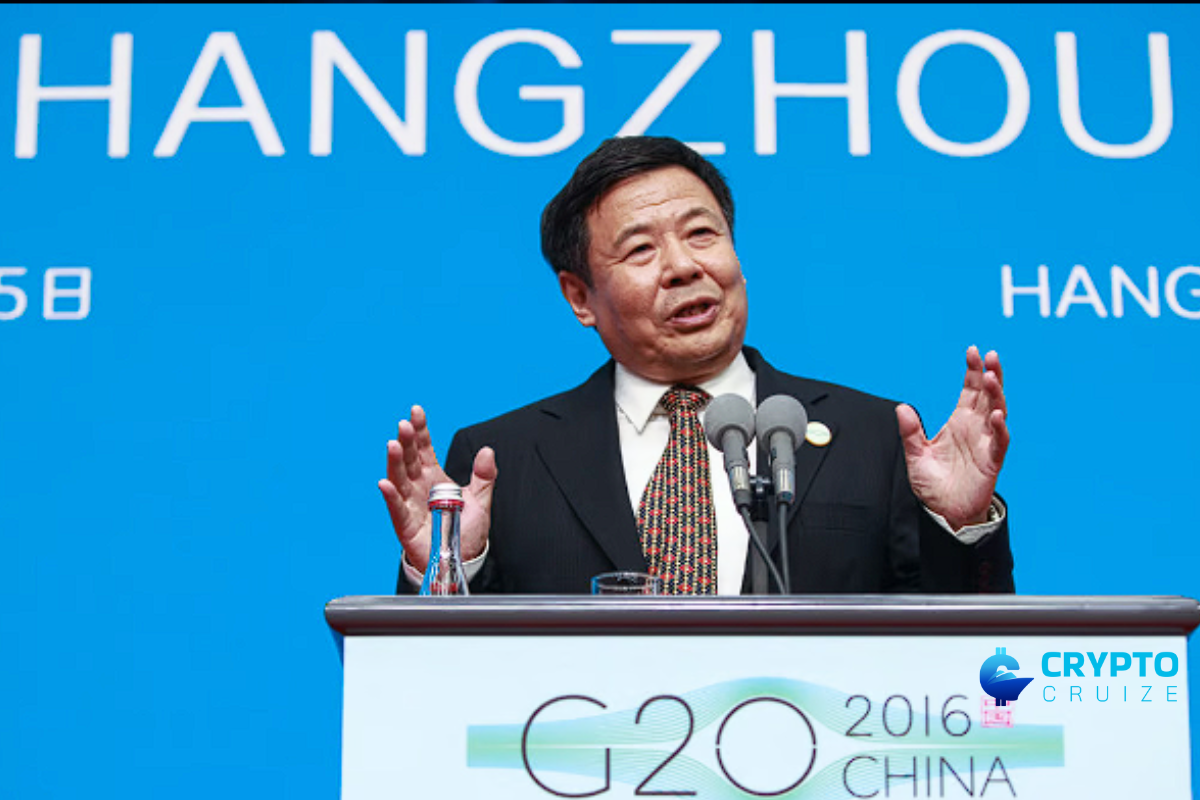

















































































Dr. Xiao Feng, Chairman and CEO of HashKey Group, believes China is beginning to re-engage with the cryptocurrency world, but not through the usual hype-driven channels. Instead, the shift will begin cautiously with stablecoins and eventually expand to real-world assets (RWA), according to the influential executive often called “The Father of China’s Blockchain.”

In a recent interview, Dr. Xiao argued that the global excitement around crypto is outpacing the reality of regulation, especially in Asia’s emerging markets. Despite the buzz in places like Hong Kong, he said, mainland China remains careful but is watching closely. The re-engagement, he believes, is driven not by speculation but by deeper economic forces, especially the pressures of global monetary competition.
Stablecoins: More Than Just Digital Cash
Stablecoins are often thought of as payment tools, but Dr. Xiao challenged this view. “Their real purpose is not just for making payments,” he said. “They serve as a bridge between volatile crypto assets and more stable value systems.”
He explained that stablecoins first became popular because they provided a reliable trading pair for cryptocurrencies. Their function has since expanded, but their potential lies in something much more significant: acting as the foundation of a new financial system.
Dr. Xiao warned that stablecoins must be built on public, permissionless blockchains to succeed. Those developed on private or consortium-based chains would likely fail, as they lack the openness required for widespread adoption. Transparency, decentralisation, and accessibility are crucial for the next wave of financial infrastructure, he emphasised.
Hong Kong’s Tightrope: Innovation vs Regulation
While Hong Kong has become a centre for stablecoin enthusiasm, Dr. Xiao noted that local regulators remain cautious. There is a visible gap between market demand and regulatory comfort. He pointed out that Hong Kong’s leadership is particularly focused on Anti-Money Laundering (AML) policies, aiming to protect the city’s reputation as a global financial hub.
According to him, blockchain-based systems can actually enhance AML measures. Unlike traditional finance, crypto transactions can be traced in real-time on-chain, making it easier to monitor and enforce rules. “Crypto’s approach to AML could be better than traditional systems,” he argued.
This transparency, he believes, is key to gaining regulatory approval and building public trust. But regulators must strike a balance supporting innovation without compromising financial integrity.
The Rise of Real-World Assets and Hong Kong’s Role
Beyond stablecoins, Dr. Xiao forecasted a future where tokenised real-world assets (RWA) will define the next stage of growth. These assets like real estate, stocks, or commodities can be represented on-chain, offering greater liquidity, transparency, and efficiency.
This shift, he said, requires regulated, onshore exchanges. The old model of offshore, lightly regulated platforms will not work for high-value, real-world-backed tokens. Compliance and proper infrastructure are essential to tap into a market potentially worth trillions.

Hong Kong, with its unique legal structure under the “One Country, Two Systems” framework, is well-positioned to lead. “Hong Kong can be the Wall Street of Asia,” Dr. Xiao said. “It connects China to the world.” He contrasted this with Singapore, which he described as “the Switzerland of Asia” with a more conservative financial strategy.
Layered Future: Open Base, Regulated Apps
In Dr. Xiao’s vision, the future of blockchain and crypto is a layered system. The base protocol must be decentralised and open to all. But the application layer, the platforms and products users interact with, will need to be centralised for efficiency and consumer protection.
“This isn’t a contradiction,” he said. “We need both openness and control in the right places.” Decentralisation ensures fairness and accessibility. Centralisation brings stability, trust, and accountability.
As China slowly steps back into the crypto space, guided by economic strategy rather than market hype, its approach starting with stablecoins and evolving to real-world assets could reshape the global digital economy. Hong Kong, with its balance of openness and regulation, may be the testing ground for this cautious yet potentially transformative comeback.