




















































































The Bank of England’s proposal to limit individual stablecoin holdings has been met with sharp criticism from UK cryptocurrency and payments groups, who argue the measure would be both costly to enforce and harmful to the country’s competitiveness in digital finance.
The Bank’s Proposal
In November 2023, the Bank of England released a discussion paper outlining potential restrictions on individual stablecoin holdings. The suggested limits ranged from £10,000 to £20,000 per person, with feedback requested on whether a lower cap of £5,000 should also be considered.
The move was designed to address concerns that widespread use of stablecoins could destabilise the traditional financial system. Regulators worry that large-scale adoption could reduce reliance on bank deposits and raise the risk of currency substitution if stablecoins tied to foreign currencies gain traction.
Industry Backlash: “Limits Don’t Work in Practice”
The response from the crypto sector has been overwhelmingly negative. UK advocacy groups say the restrictions would be impractical and leave Britain lagging behind other jurisdictions moving faster on digital assets.
Simon Jennings, executive director of the UK Cryptoasset Business Council (UKCBC), told the Financial Times:
“Limits simply don’t work in practice. Issuers don’t have sight of who holds their tokens at any given time, so enforcing caps would require a costly, complex new system.”
Jennings also highlighted that caps could derail plans for an international payments corridor between the UK and the US using stablecoins. Such initiatives, he argued, are vital for boosting the UK’s standing in cross-border digital finance.

Coinbase’s vice-president of international policy, Tom Duff Gordon, echoed these concerns, warning that the proposed limits could harm both savers and the pound itself:
“No other major jurisdiction has deemed it necessary to impose caps.”
Regulators’ Concerns: Systemic Risk and Currency Substitution
The Bank of England and the Financial Policy Committee (FPC) remain cautious about the rapid growth of stablecoins. In April, the FPC noted that crypto markets had expanded significantly in the past year, raising the need for more robust safeguards.
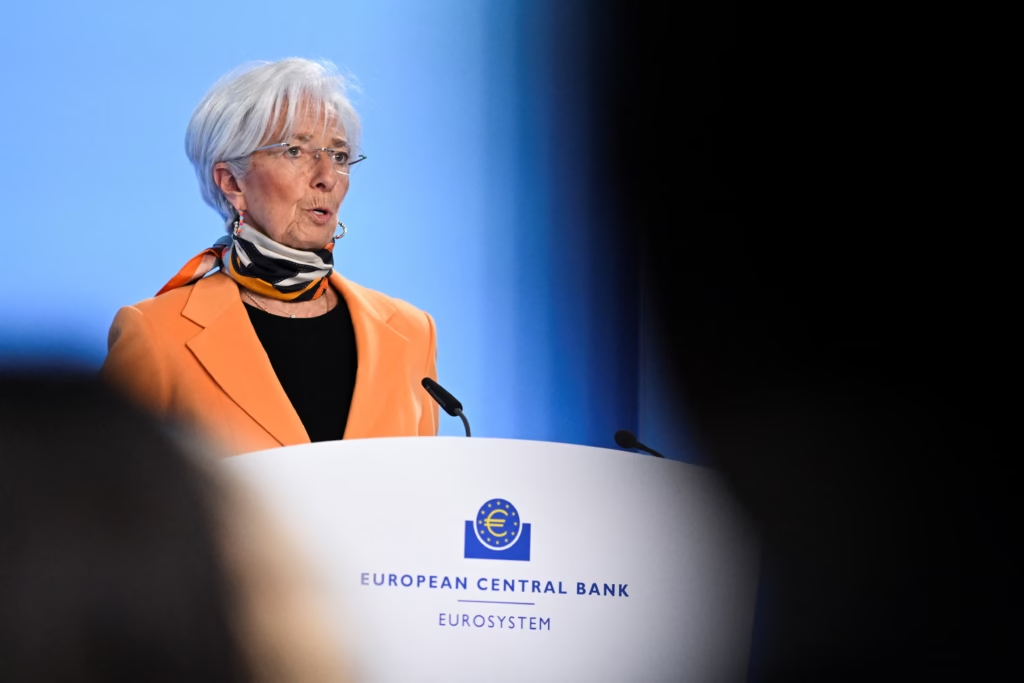
Officials worry that greater use of foreign-denominated stablecoins could weaken local currencies by encouraging substitution away from the pound. This is a fear echoed elsewhere in Europe. Earlier this month, European Central Bank (ECB) president Christine Lagarde warned that US policies on stablecoins could accelerate euro outflows into dollar-linked assets, further strengthening the dollar’s role in global payments.
Banks themselves are also wary. Some fear they may not be able to compete with stablecoins if issuers begin paying yields to holders. Ronit Ghose, Citi’s head of Future of Finance, drew parallels with the 1980s boom in money market funds, cautioning that interest-bearing stablecoins could trigger significant bank outflows.
Industry’s Counterpoint: Compete, Don’t Restrict
Leaders in the digital asset industry argue that banks should rise to the challenge rather than rely on restrictive regulation. Matt Hougan, chief investment officer at Bitwise, recently stated:
“If local banks are worried about competition from stablecoins, they should pay more interest on deposits.”
Crypto lobbyists also point out that restrictive caps could hinder innovation and push business abroad. George Osborne, the former UK chancellor who has become an advocate for digital assets, recently warned that the UK is already falling behind in the race to capture opportunities in stablecoins and other areas of the crypto economy.

From this perspective, caps would not only undermine competitiveness but also limit consumer choice in a financial landscape where convenience, efficiency and global access are increasingly valued.
A Balancing Act for the Future
The debate highlights a fundamental tension at the heart of financial regulation: balancing innovation with systemic stability. The Bank of England’s caution reflects legitimate concerns about safeguarding the pound and protecting the traditional financial system from disruption.
However, industry voices argue that innovation cannot thrive under excessive restrictions. With other jurisdictions moving forward without such caps, the UK risks becoming less attractive to digital asset firms and investors.
As regulators weigh feedback, the future of stablecoin adoption in Britain hangs in the balance. A decision to impose caps could slow growth in the sector, while a more open framework might help position the UK as a global leader in financial innovation.
What is clear is that stablecoins are no longer a niche element of crypto markets. They are fast becoming a core part of the digital financial system and the UK’s approach will determine whether it keeps pace with international developments or falls behind.