























































































Billions Blocked Amid Rising Scrutiny
Stablecoin issuer Tether has frozen roughly $4.2 billion worth of its USDT tokens over the past three years in connection with suspected criminal activity, according to a report citing the company. A significant portion of those funds was restricted from 2023 onward, as regulators and law enforcement agencies stepped up efforts to combat crypto-related fraud, sanctions evasion, and money laundering.
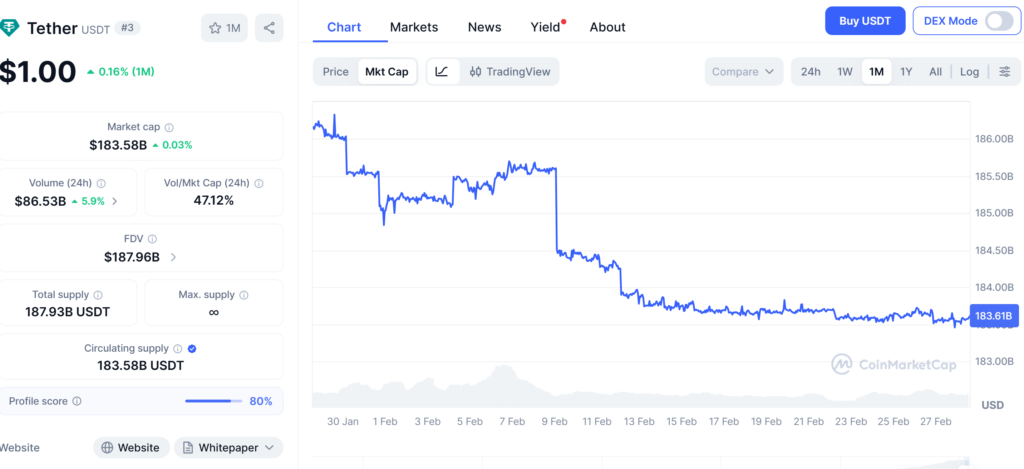
USDT, the firm’s dollar-pegged stablecoin, remains the largest in circulation, with more than $180 billion outstanding. That figure has surged from around $70 billion three years ago, reflecting rapid growth in demand for dollar-backed digital assets across global markets.
Cooperation With Law Enforcement
Tether has the technical ability to freeze tokens directly on the blockchain by blacklisting wallet addresses. The company says it acts when presented with requests from authorized agencies.
Earlier this week, Tether confirmed it had assisted the US Department of Justice in seizing nearly $61 million in USDT tied to so-called pig butchering scams. In these schemes, fraudsters build trust with victims over time before persuading them to transfer funds into fraudulent investment platforms.
In a separate case this month, the company froze approximately $544 million in cryptocurrency at the request of Turkish authorities. The funds were allegedly linked to an illegal online betting and money laundering operation.
The increasing reliance on stablecoin issuers to intervene highlights how crypto firms are becoming more deeply integrated into global enforcement efforts.
Thousands of Wallets Blacklisted
Blockchain analytics firm Elliptic reported that by late 2025, major stablecoin issuers including Tether and Circle had blacklisted around 5,700 wallet addresses holding approximately $2.5 billion in digital assets. Roughly three quarters of those addresses contained USDT at the time they were frozen.
The data underscores USDT’s dominant role in crypto transactions and, consequently, its visibility in cases involving suspicious flows of funds.
Supply Contracts After Rapid Expansion
While enforcement activity has increased, USDT’s circulating supply has recently declined. Blockchain data shows the token is on track for its largest monthly contraction in three years. Circulating supply fell by about $1.5 billion in February, following a $1.2 billion drop in January.
The pullback mirrors patterns seen after the collapse of FTX in late 2022, a period marked by sharp liquidity tightening across crypto markets.
Tether has described the recent declines as short-term distribution adjustments rather than a sign of weakening demand. The company noted that USDC, issued by Circle, also experienced a multibillion-dollar reduction in supply during the same period.
Growing Role in Market Oversight
As stablecoins become central to trading, payments, and cross-border transfers, issuers are increasingly positioned at the intersection of private finance and public enforcement. The freezing of billions in USDT reflects both the scale of illicit activity that passes through digital assets and the growing expectation that major issuers will act when authorities raise concerns.
With USDT’s supply still far above pre-2022 levels, its influence in crypto markets remains substantial even as oversight tightens.