






















































































A US federal court has handed down a 20 year prison sentence to Daren Li, the alleged architect of a massive cryptocurrency scam that defrauded investors of more than $73 million. The case is one of the most high profile convictions linked to the so called pig butchering fraud model, which has become a growing threat to crypto users worldwide.
Court Hands Maximum Sentence to Fugitive Scammer
Daren Li, 42, a dual national of China and St. Kitts and Nevis, was sentenced in the Central District of California to the statutory maximum of 20 years in federal prison, followed by three years of supervised release. The sentence was announced by the US Department of Justice on Tuesday.
According to prosecutors, Li has been a fugitive since December 2025 after cutting off his electronic ankle monitor and fleeing authorities. Despite his absence, the court proceeded with sentencing, underscoring the seriousness of the crimes and the scale of financial damage caused to victims across the United States.
Assistant Attorney General A. Tysen Duva said the punishment reflected the severe impact of the scheme, which left many victims with devastating financial losses. He added that US authorities are coordinating with international law enforcement agencies to ensure Li is brought back to the country to serve his full sentence.
How the Pig Butchering Scheme Worked
Court documents detail how Li and at least eight co conspirators operated a sophisticated global fraud network. The group created fake websites and spoofed domains that closely resembled legitimate cryptocurrency trading platforms. These platforms were used to promote fraudulent investment opportunities that appeared professional and credible to unsuspecting users.
The scheme relied heavily on social engineering. Scammers often made first contact through social media platforms or dating apps, gradually building trust by posing as friendly professionals or romantic partners. Once a relationship was established, victims were encouraged to invest in crypto projects that promised high returns.
After victims transferred funds, usually in cryptocurrency, the money was routed through accounts controlled by the conspirators. By the time victims realized the platforms were fake, their funds had already been laundered and dispersed.
Millions Laundered Through Shell Companies
Li admitted in court filings that the group tricked victims into transferring at least $73.6 million. Of that amount, nearly $59.8 million flowed through US based shell companies used to launder the stolen funds. These companies helped disguise the origin of the money and made it harder for victims and authorities to trace the transactions.
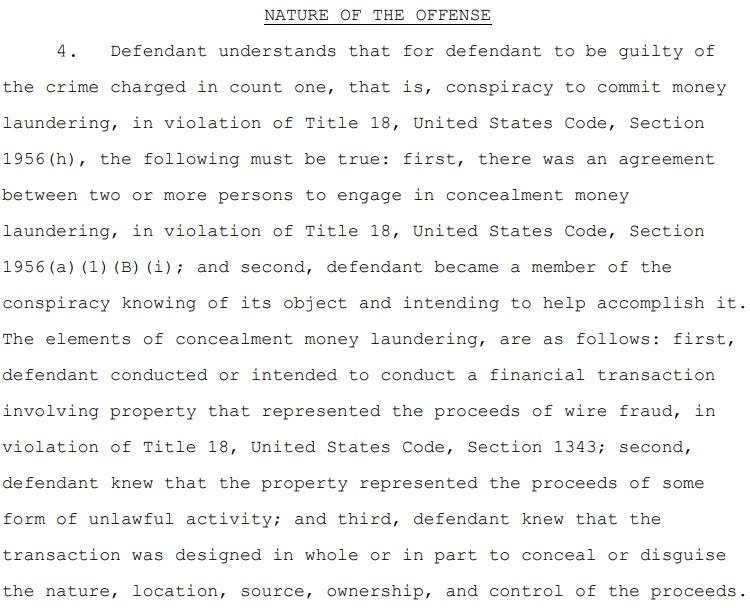
The laundering operation played a central role in the case, leading Li to plead guilty in November 2024 to conspiracy charges related to money laundering and fraud linked to crypto scams. His sentencing comes more than a year after that guilty plea.
Li is the first defendant in the case to be sentenced. Eight other co conspirators have already pleaded guilty and are awaiting their own sentencing hearings.
Investigation Led by Multiple US Agencies
The investigation into the scam is ongoing and involves several US agencies. It is being led by the US Secret Service Global Investigative Operations Center, with support from Homeland Security Investigations’ El Camino Real Financial Crimes Task Force and the US Marshals Service.
Officials say the case highlights the increasingly international nature of crypto related fraud and the need for cross border cooperation to track suspects, recover funds, and hold perpetrators accountable.
Crypto Scams Surge Again in Early 2026
Li’s sentencing comes amid a renewed rise in crypto scams at the start of 2026. According to data from blockchain security firm CertiK, scammers stole about $370 million in January alone, making it the worst month for crypto related losses in nearly a year.
Phishing scams accounted for the bulk of the damage, with roughly $311 million lost. One particularly severe social engineering incident reportedly cost a single victim around $284 million.
January’s losses marked the highest monthly total since February 2025, when attackers stole an estimated $1.5 billion. That figure was largely driven by the $1.4 billion hack of the Bybit crypto exchange, one of the biggest exchange breaches on record.
As authorities continue to pursue high profile cases like Li’s, regulators and security experts are urging investors to remain cautious, especially when approached online with unsolicited investment offers that promise unusually high returns.