





















































































A16z leads push to bring digital dollars to Pakistan
Andreessen Horowitz (a16z) has led a $12.9 million funding round for ZAR, a young fintech startup working to bring stablecoins to Pakistan’s vast unbanked population. The one-year-old firm plans to turn everyday corner shops and phone kiosks into entry points for dollar-backed digital money, allowing millions to transact without needing to understand crypto.
The funding round, reported by Bloomberg on Tuesday, also drew support from Dragonfly Capital, VanEck Ventures, Coinbase Ventures and Endeavor Catalyst. ZAR’s mission targets Pakistan’s 240 million people, where the World Bank estimates more than 100 million adults still lack access to formal banking.
Co-founders Sebastian Scholl and Brandon Timinsky, who previously built and sold the digital wallet SadaPay to Turkey’s Papara in 2024, are betting that familiar cash-in, cash-out networks can make crypto adoption practical and safe for everyday users.
Turning corner stores into stablecoin access points
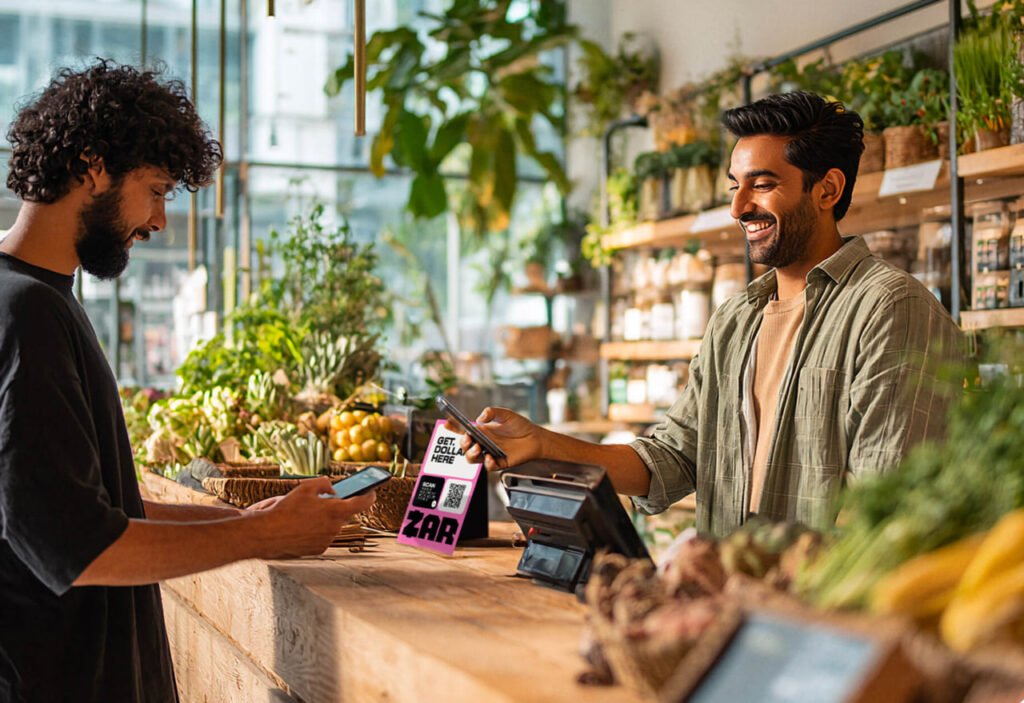
While most crypto firms focus on digital exchanges and trading apps, ZAR is taking a different route. It’s building partnerships with small retail shops, phone kiosks and money agents, the same network already used for mobile top-ups and remittances.
At these locations, users can walk in with cash, scan a QR code and receive stablecoins in a mobile wallet linked to a Visa card that works globally. The process requires no blockchain knowledge and no complex onboarding.
“People shouldn’t need to be crypto experts to access better money,” Scholl said in an earlier statement. “If someone can top up their phone, they should be able to top up their digital wallet just as easily.”
The startup says early results from its Pakistan pilot are promising, particularly in major cities where smartphone usage and remittance flows are strong.
Building trust through simplicity
ZAR’s model aims to address one of the biggest hurdles to digital finance in emerging markets-trust. By relying on existing neighborhood shops, the company hopes users will feel comfortable handling stablecoins the same way they already handle mobile money.
Transactions are designed to be instant and transparent, letting users convert local currency into dollar-pegged stablecoins without needing a bank account. These stablecoins can then be used for remittances, savings, or online payments anywhere Visa is accepted.
The company believes this hybrid system, cash-based entry with blockchain-backed stability, can help citizens preserve value in a country where the rupee has faced repeated devaluations.
Expansion plans beyond Pakistan
The $12.9 million funding brings ZAR’s total raised capital to $20 million. The team plans to expand into select African markets by 2026 if its Pakistan rollout continues to perform well.
The founders see parallels between Pakistan and markets like Nigeria and Kenya, where large unbanked populations and strong mobile money networks make for similar opportunities.
According to Scholl, the goal isn’t to replace local currency but to complement it with a more stable, globally recognized option for savings and trade. “We’re building bridges between cash economies and the digital dollar economy,” he said.
Pakistan moves toward clearer crypto rules
ZAR’s timing coincides with Pakistan’s efforts to formalize its crypto sector. Earlier this year, the government established the Pakistan Virtual Assets Regulatory Authority (PVARA) to oversee digital asset activities and licensing.
Last month, the country also invited global crypto exchanges and virtual asset service providers (VASPs) to apply for licenses under a new federal framework, a move that signals growing openness to the industry.
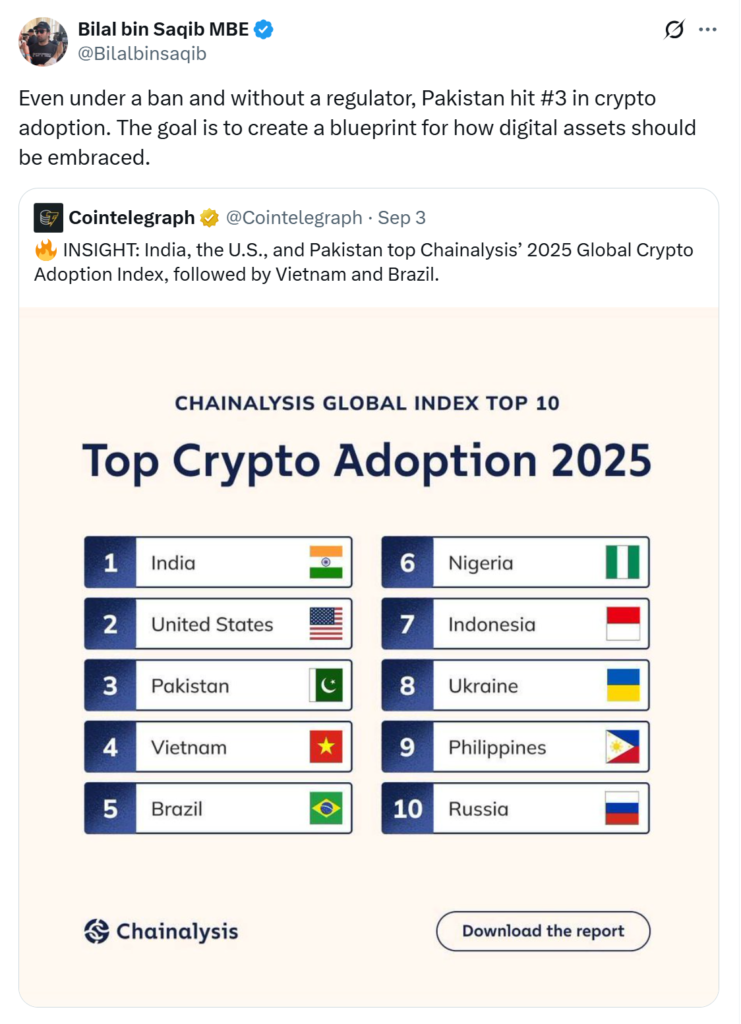
Pakistan has quickly climbed the ranks of global crypto adoption. The latest Chainalysis 2025 Global Crypto Adoption Index places the country third worldwide, up six spots from the previous year.
As regulation progresses and infrastructure like ZAR’s expands, Pakistan could become one of the first large emerging markets where stablecoins move from speculation to everyday utility.