



















































































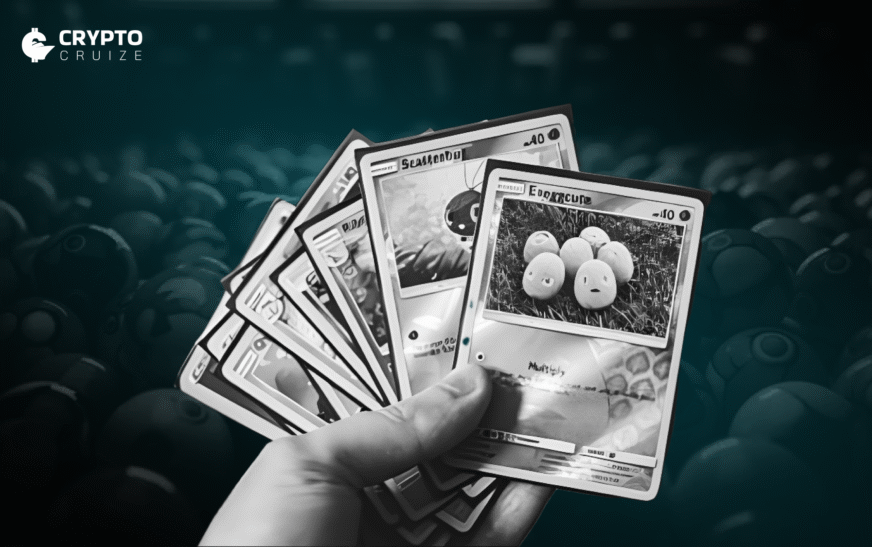
Pokémon cards, long cherished by collectors and gamers, may soon have their “Polymarket moment” as blockchain technology enters the $21.4 billion trading card market. According to Danny Nelson, research analyst at Bitwise, tokenisation could transform how collectors buy, sell and trade Pokémon cards, opening the door to a new era for collectibles on-chain.
Why Pokémon Fits Blockchain Better than Stocks
Real-world asset (RWA) tokenisation has gained traction in recent years, growing into a $28.34 billion market in 2025. Much of this growth has focused on stocks, bonds and real estate. But Nelson argued these assets already enjoy efficient digital rails, meaning tokenisation adds limited value.
Pokémon cards, however, remain tied to physical logistics. Moving a rare Charizard, Pikachu, or Gardevoir card often involves shipping, authentication and trust in third parties. Blockchain could streamline this by issuing tokenised versions that are easily tradable, while the underlying physical card is securely stored.
This makes Pokémon cards uniquely suited for tokenisation offering global access, instant settlement and secure ownership without the friction of physical handling.
A Booming Market Ready for Disruption
The trading card sector is already massive. Whatnot, a leading marketplace for collectibles, handled $3 billion in sales last year, underscoring strong demand. Nelson hinted that blockchain-powered Pokémon exchange-traded funds (ETFs) or investment vehicles could appear sooner than expected, enabling broader participation from both retail and institutional investors.
Collector Crypt, a start-up in the space, has already made moves. Its Solana-based platform, Metaplex, allows users to trade Pokémon cards seamlessly. Early results have been eye-catching: the platform’s native token, CARDS, surged 10x in just one week, reaching a fully diluted valuation of $450 million.
Collector Crypt’s Early Success
Collector Crypt’s success highlights the appetite for blockchain-powered collectibles. Its Gacha Machine project, which gamifies card trading, generated $16.6 million in revenue in just seven days. At the same time, the company projects annual revenues of $38 million from its broader operations.

This growth coincides with renewed momentum in the NFT market. According to DappRadar, NFT trading volumes rose 9% in August to $578 million, the highest level since January. Although fewer assets are being traded, collectors are spending more per transaction, suggesting increasing confidence in high-value digital collectibles.
The success of CARDS demonstrates how tokenisation can create liquidity and excitement around niche markets that have traditionally been illiquid and fragmented.
Could Pokémon Bring Millions into Crypto?
Pokémon is one of the most recognisable brands in the world, with millions of dedicated fans across generations. If its trading cards are tokenised at scale, the move could serve as a gateway for mainstream audiences to enter the world of blockchain and decentralised finance.
For now, it remains early days. Yet, with a $21.4 billion market ripe for innovation and successful pilot projects already underway, the likelihood of a Pokémon-powered crypto boom looks stronger than ever.
If Nelson’s prediction proves accurate, Pokémon could soon do for collectibles what Polymarket did for prediction markets make blockchain indispensable for a global audience.