


















































































Kanye West, the artist now known as Ye, has stepped into the world of cryptocurrency with the launch of his own token, YZY. Unveiled on 21 August and built on the Solana blockchain, the coin quickly reached a market cap of $3 billion within hours.
The launch, like much of West’s career, was a spectacle blending celebrity influence, flashy branding, and crypto hype. Yet behind the headlines, concerns are mounting about whether YZY is truly a fan-first digital currency or just another risky celebrity-backed project.
The “Official Yeezy Coin”
According to its promoters, YZY is more than just a memecoin. The official website positions it as the currency of the wider Yeezy ecosystem. Fans are told it could be used for purchasing Yeezy products and tied to new digital services in the future.
Alongside the token, West introduced YE Pay, a crypto payment platform, and the YZY Card, a debit card that promises to connect his fanbase to the crypto economy.
For West, this is pitched as a bold fusion of music, fashion, and digital technology. For critics, however, it looks like a familiar script: a celebrity token powered more by hype than solid fundamentals.
Tokenomics Raise Eyebrows
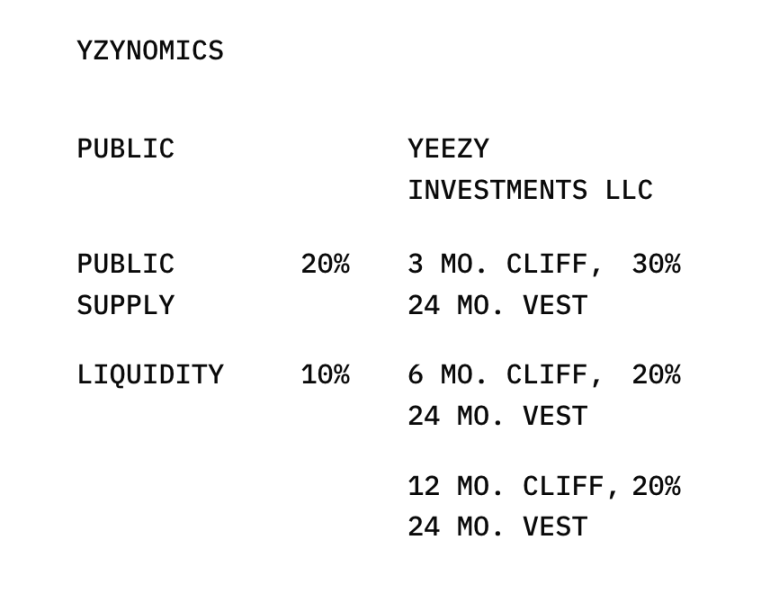
The biggest red flag around YZY lies in its token distribution. On-chain data shows that just six wallet addresses control more than 90% of the total supply. Even more striking, West himself reportedly holds 70% of all tokens.
This means that the value of YZY is effectively dictated by West and a handful of investors, rather than the wider community. Another 20% has been reserved for investors, while only 10% has gone into liquidity pools, the small portion that actually makes the token tradable for the public.
For a project marketed as a decentralised fan currency, this centralisation undermines its credibility. Instead of broad ownership, YZY looks more like a bet on Kanye West’s personal brand.
A Sudden Change of Heart
West’s embrace of crypto is also surprising given his past comments. During last year’s memecoin craze, he claimed to have turned down a $2 million offer to launch a token, calling such projects exploitative and driven by hype at the expense of loyal fans.
His reversal now raises uncomfortable questions. Why has he suddenly decided to launch a token he once criticised? And why choose a moment when memecoin interest has cooled off and investor trust in celebrity-led projects is at a low point?
Suspicion Over Timing and Insider Gains
The timing of YZY’s launch has puzzled many in the crypto community. Earlier in 2025, memecoins were surging, but the frenzy has since slowed. Most leading tokens have fallen more than 70% from their peaks, and traders are wary after multiple rug pulls and scams.
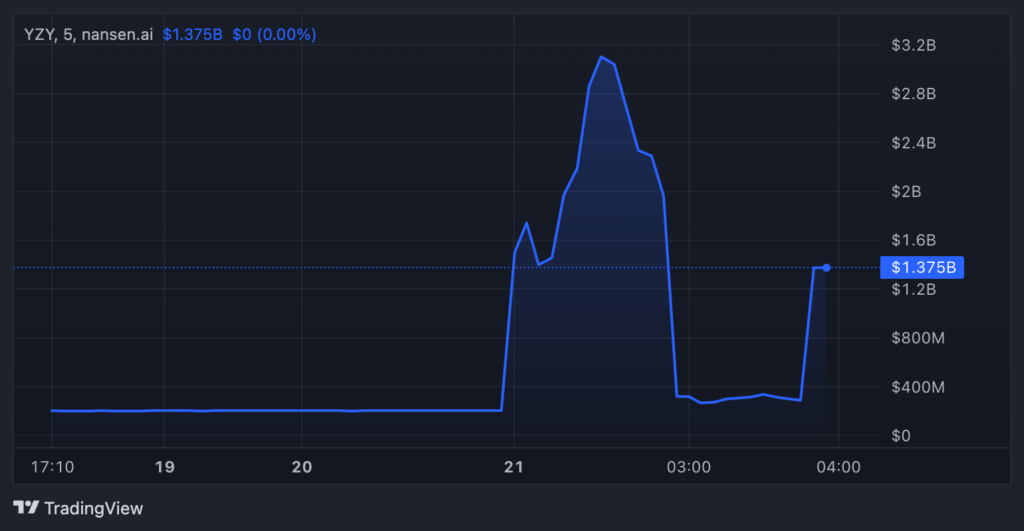
On-chain activity has only fuelled doubts. Some wallets began selling large amounts of YZY immediately after launch, despite showing no public record of purchasing tokens. This suggests early insider allocations. Meanwhile, some traders made rapid fortunes, with one turning $50 into $40,000 within hours, highlighting the volatile, speculative nature of the coin.
Market Verdict: Boom or Bust?
The immediate response to YZY’s launch mirrors previous celebrity coin experiments. Some traders enjoyed quick gains, but many others warned it could signal a market top rather than a new beginning.
Veteran investors pointed out the striking similarities with earlier projects: heavy insider ownership, vague promises of future utility, and reliance on celebrity hype. For sceptics, it looks less like an innovative ecosystem coin and more like another cautionary tale in crypto’s ongoing battle with hype-driven speculation.
What happens next will depend on whether West can truly deliver real-world use cases for YZY or whether the token will fade as another short-lived spectacle. For now, the market remains divided between those who see opportunity and those who see red flags.