





















































































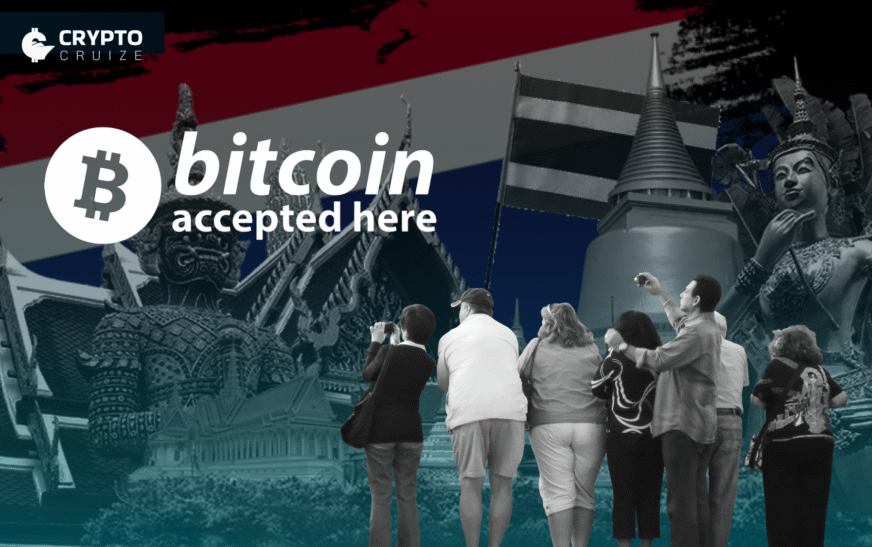
Thailand is preparing to roll out a new digital payments scheme that will allow international visitors to use cryptocurrency during their stay. The initiative, called TouristDigiPay, is designed to boost the country’s struggling tourism industry and modernise its payment systems.
TouristDigiPay: A New Option for Visitors
Starting Monday, foreign visitors in Thailand will be able to exchange cryptocurrencies for Thai baht and use those funds for electronic payments through e-money service providers. According to a report from The Nation, the scheme will operate as a regulatory sandbox, allowing officials to monitor and manage the system before a wider rollout.
Tourists who wish to use TouristDigiPay must complete Know Your Customer (KYC) checks and open accounts with both a regulated digital asset business and an e-money provider approved by the Bank of Thailand and the Securities and Exchange Commission (SEC).

To safeguard against misuse, there will be monthly spending limits and restrictions on direct cash withdrawals. Full details are expected to be revealed by Deputy Prime Minister and Finance Minister Pichai Chunhavajira on launch day.
Why Thailand Is Turning to Crypto
The Thai government hopes that crypto adoption will make the country more appealing to foreign travellers, particularly at a time when visitor numbers are declining. In the first half of 2025, Thailand welcomed 16.8 million tourists, down from 17.7 million during the same period last year.
The sharpest decline has been among visitors from East Asia. The number of Chinese tourists, once the backbone of Thailand’s tourism industry, dropped by 34% year-on-year, while East Asian arrivals overall fell by 24%, according to data from the World Tourism Institute.
Meanwhile, other destinations such as Japan and Vietnam have become more competitive, thanks to lower travel costs and favourable currency conditions. Japan’s weaker yen, for example, has made it an attractive alternative for many travellers.
The government believes that offering modern payment options, including crypto, could help Thailand reposition itself as a forward-looking and tourist-friendly destination.
Ongoing Experiments with Digital Payments
Thailand has been exploring the use of digital assets to stimulate its economy for some time. Earlier this year, a trial was announced to allow foreign visitors to pay for goods and services with cryptocurrency in Phuket, one of the country’s most visited tourist hotspots. That trial is still ongoing.
In addition, the Thai SEC recently completed a public consultation on financial innovation and the use of digital assets to support both economic growth and tourism. The TouristDigiPay launch appears to be a direct result of these efforts.
Chunhavajira first introduced the concept in May during an investment seminar in Bangkok, emphasising that crypto payments could enhance Thailand’s appeal to digital-savvy travellers.
A Global Trend in Tourism and Crypto
Thailand is not alone in turning to cryptocurrency to attract tourists. Other countries and businesses around the world are experimenting with similar initiatives.
- In Bhutan, local bank DK Bank has partnered with Binance Pay to allow visitors to pay for expenses using crypto.
- In the United Arab Emirates, the government has partnered with Crypto.com to enable crypto payments for flights and in-flight purchases.
- Even the space tourism industry is joining in: Jeff Bezos’s Blue Origin signed a deal with Shift4 Payments to let customers pay for space travel with Bitcoin, Ether, Solana, and stablecoins such as USDT and USDC.
By aligning itself with these global moves, Thailand aims to strengthen its competitive edge and ensure its tourism sector adapts to changing traveller expectations.
The TouristDigiPay sandbox will be closely watched to see how effective it is in attracting new visitors and making life easier for existing ones. If successful, the system could expand nationwide and even inspire other countries in the region to follow suit.
With tourist arrivals slipping and regional competition heating up, Thailand’s embrace of cryptocurrency payments may prove to be more than just a short-term experiment, it could be a key part of the country’s long-term tourism strategy.