




















































































A group of U.S. Senate Democrats is pressing for answers from the Federal Housing Finance Agency (FHFA) after its director, William Pulte, issued an order to explore using cryptocurrency assets in mortgage approval processes. The senators say the plan could pose serious risks to the U.S. housing market and raise ethical concerns.
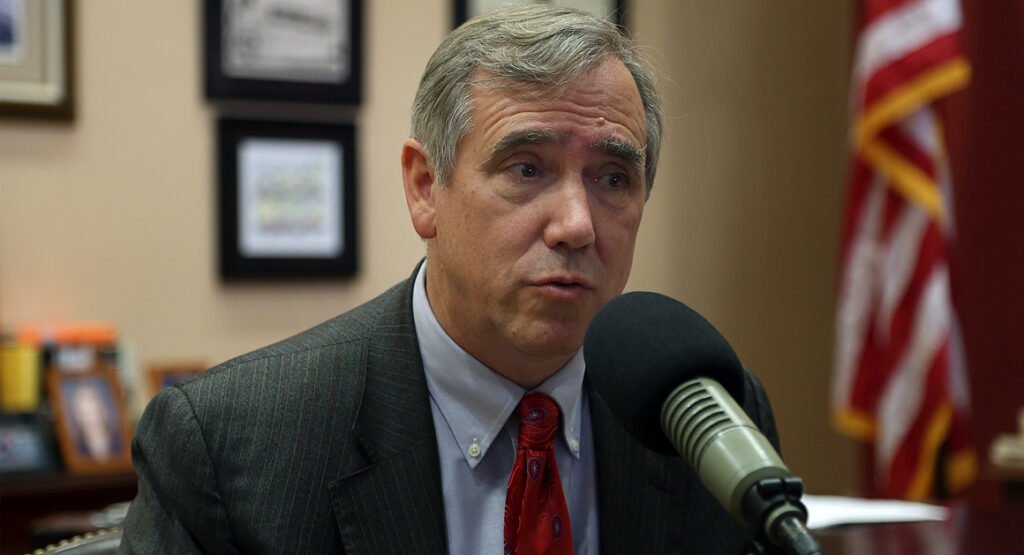
In a letter sent to Pulte on Friday, five Democratic senators led by Jeff Merkley, and co-signed by Elizabeth Warren, Bernie Sanders, Chris Van Hollen, and Mazie Hirono, demanded more information about the initiative. The letter asked Pulte to explain the intent behind the order and to outline its potential consequences. They have requested a full response by August 7.
Pulte’s Plan to Include Crypto in Mortgage Evaluations
In June, William Pulte directed government-backed mortgage providers Fannie Mae and Freddie Mac to propose how crypto holdings could be factored into risk assessments for single-family mortgage loans. Notably, the order suggested that the crypto should be considered without requiring it to be converted into U.S. dollars first, a significant departure from current policy.
Under existing rules, federally-backed mortgage lenders are only allowed to consider assets that are denominated in U.S. dollars. Cryptocurrencies must typically be liquidated before being recognised in a mortgage application.
Pulte’s proposal would change that by allowing crypto holdings to be treated similarly to cash or other financial assets, a move that could make homeownership more accessible to crypto investors. However, critics argue that such a policy shift would introduce volatile and risky assets into a financial system already cautious of crypto’s reputation.
Senators Warn of Financial and Consumer Risk
The senators have raised several red flags in their letter. They argue that crypto’s history of extreme price volatility and limited liquidity could pose new risks to the housing market. Borrowers relying on crypto may find themselves unable to exit positions during downturns, making it difficult to meet mortgage obligations.
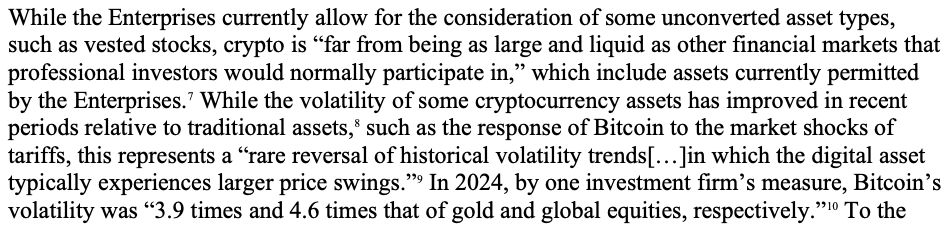
They wrote, “Crypto is also subject to heightened risks of loss due to scams, cyber hacks, or physical theft, which could leave homeowners vulnerable to losing their crypto assets with little hope of recovery.”
They added that these risks, if not carefully managed, could expose not just individual borrowers but also the wider financial system to instability, particularly if such assets are used as a foundation for mortgage lending.
Concerns Over Conflicts of Interest and Lack of Oversight
The senators also questioned whether there were conflicts of interest influencing the FHFA’s decision. According to financial disclosures, Pulte’s spouse holds up to $2 million in crypto assets. The senators argue this creates a potential conflict, especially since Pulte himself is the chair of both Fannie Mae’s and Freddie Mac’s boards, bodies that must approve the proposed crypto policy.
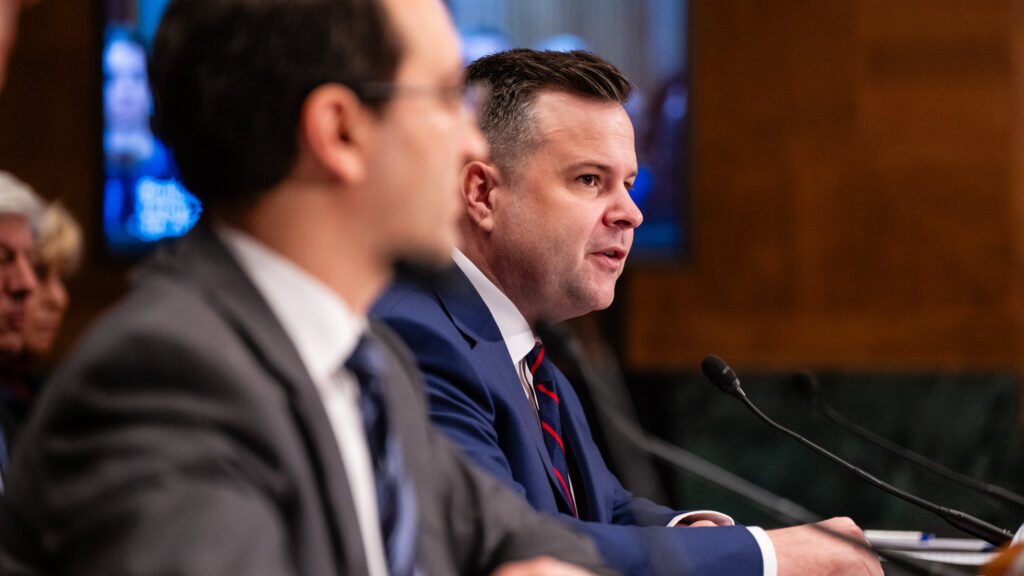
They accuse Pulte of stacking these boards with individuals tied to the crypto industry, making it harder to guarantee impartial decision-making. Moreover, the senators voiced concerns about former President Donald Trump and his family, who have substantial involvement in cryptocurrencies, including tokens, a trading platform, and NFTs.
The senators are asking how the agency will guard against crypto-linked actors influencing policy, and how Pulte plans to handle his own conflicts of interest.
Democrats Demand Transparency and Justification
Beyond concerns over the policy itself, the senators criticised the order for lacking clarity and transparency. They claim the order provides no detail on how Fannie Mae and Freddie Mac would develop their proposals, how the FHFA has assessed the risks and benefits, or how the public and financial stakeholders would be consulted.
The letter referenced the 2023 banking crisis, when three U.S. banks collapsed partly due to their heavy exposure to crypto businesses. The senators argue this event shows the potential dangers of integrating poorly regulated crypto assets into the broader financial system.
They also cited Fannie Mae’s 2021 assessment, which found crypto’s use in payments, deposits, and collateral to be the least attractive application of blockchain technology for the housing industry.
The group wants Pulte to explain his full decision-making process, provide all communications related to the crypto order, and clarify how oversight will be enforced.
This development signals a broader debate within U.S. financial policymaking: should crypto be treated as a legitimate asset class in traditional finance, or should it remain on the sidelines until better regulation and stability are achieved?
While proponents argue that crypto is maturing and could offer new avenues for financial inclusion, critics especially in Washington are not yet convinced. The outcome of this probe could shape how crypto interacts with the U.S. housing market in the years to come. For now, the FHFA is under pressure to explain itself, as lawmakers demand greater scrutiny before any permanent changes are made.