
























































































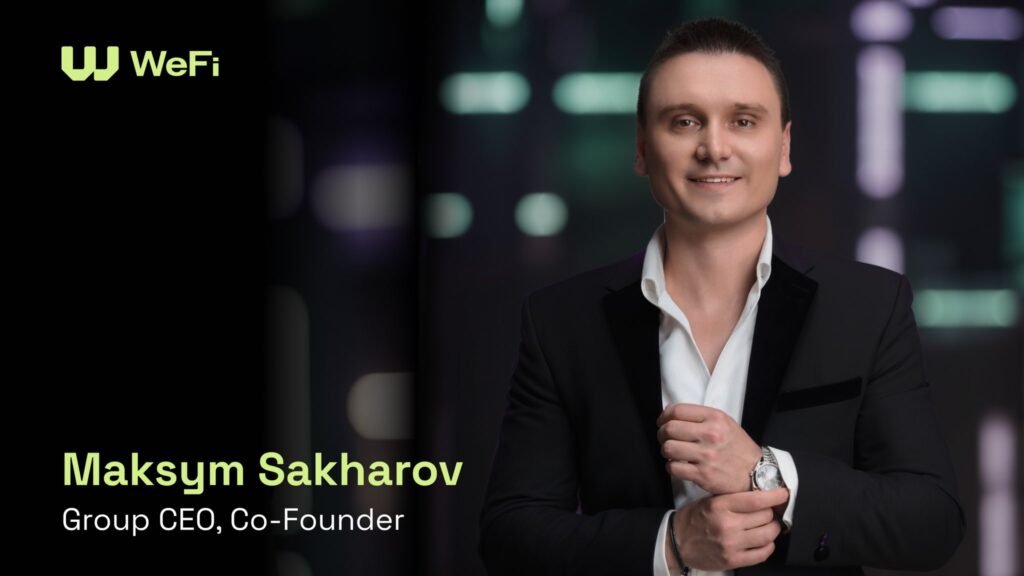
Japan’s stagnating crypto sector is being held back not by high taxes but by an overly cautious and bureaucratic regulatory culture, says WeFi CEO Maksym Sakharov. In a conversation with Cointelegraph, Sakharov highlighted that despite growing calls to reform the country’s 55% progressive crypto tax, it’s the Financial Services Agency (FSA) and Japan Virtual and Crypto Assets Exchange Association (JVCEA)’s approval system that continues to drive Web3 innovation offshore.
“The 55% tax is painful and very visible, but it’s not the core blocker anymore,” Sakharov explained. “The pre‑approval model and the absence of a truly dynamic sandbox are what keep builders and liquidity offshore.”
Japan’s rigid two-step regulatory process for token listings or initial exchange offerings (IEOs) demands both a self-regulatory review from the JVCEA and final oversight from the FSA. This can delay product launches by 6 to 12 months or more, a major hurdle for crypto startups that rely on speed and flexibility.
Delays That Drain Startups’ Momentum
Sakharov pointed to repeated delays in JVCEA’s token screening and IEO white paper vetting, as well as the cumbersome requirement of multiple revision rounds for product updates submitted to the FSA. This time-consuming approval process, he said, “burns runway” for startups and pushes many Japanese projects to launch overseas first.
“The process is designed to avoid downside, not to accelerate innovation,” Sakharov noted, criticising the defensive approach taken by regulators.
In his view, the current system disincentivises experimentation, ultimately harming Japan’s competitiveness in the fast-evolving global crypto space. Projects building in Japan often face a paradox: spending months developing a compliant product, only to be told their token can’t be listed or the product can’t be launched due to vague or shifting rules.
Falling Behind Asia’s Crypto Pioneers
When compared with other Asian crypto hubs like Singapore, South Korea, and the United Arab Emirates (UAE), Japan is clearly lagging. While these countries also maintain regulatory oversight, Sakharov said they provide clearer, faster, and more innovation-friendly frameworks.
“Singapore is strict too, but it provides clearer pathways… The UAE is faster on average… South Korea’s VAUPA focuses on ongoing exchange obligations rather than a Japan-style external pre-approval, so listings are typically processed materially faster,” he explained.
As long as Japan maintains its slow approval culture, even proposed tax reforms such as a new 20% flat rate on crypto gains, will fail to reverse the talent and capital flight. “Culture eats tax cuts for breakfast,” Sakharov warned.
Call for Agile, Risk-Based Regulation
To remain relevant and retain its domestic Web3 talent, Sakharov urged Japanese regulators to embrace a more adaptive and agile approach. His recommendations include:
- Time-boxed, risk-based approvals: A faster, outcome-oriented process with clearly defined timeframes.
- Functional regulatory sandbox: An environment that allows for real-world testing of staking models, governance mechanisms, and product innovations.
- Proportional disclosure requirements: Less burdensome compliance for early-stage or lower-risk projects.
Without such reforms, Japan risks becoming an innovation backwater, while more dynamic regions in Asia capture both investment and developer mindshare.
Asia’s Crypto Leadership Attracts Global Capital
Japan’s cautious approach stands in stark contrast to neighbouring regions making swift regulatory advances. Hong Kong, for example, recently launched the Ensemble Sandbox, a fast-track innovation hub for crypto and tokenised finance. Maarten Henskens of Startale Group praised the region’s agility: “While Japan is building long-term depth, Hong Kong is showing how agility can bring experimentation to life.”
The UAE has also earned a reputation for progressive crypto regulation. With frameworks supporting tokenised securities and a welcoming stance for fintech, it continues to attract global players.