


















































































South Korea is moving decisively towards allowing spot cryptocurrency exchange-traded funds (ETFs), signalling a major shift in regulatory attitude under the new administration. The country’s Financial Services Commission (FSC) has submitted a comprehensive roadmap to the Presidential Committee on Policy Planning, aiming for a rollout of crypto-backed ETFs by the second half of 2025.
This long-awaited development reflects South Korea’s growing intent to embrace digital asset innovation, aligning itself with global financial hubs pushing for regulated crypto investment products.
FSC Roadmap Lays Groundwork for Crypto ETF Framework
The FSC’s proposed roadmap provides a clear structure for launching spot crypto ETFs, detailing a phased approach that includes infrastructure development, investor protection, risk mitigation, and custodial mechanisms.
“We plan to establish the basis for introduction and build related infrastructure such as establishment, consignment, operation, and evaluation, as well as investor protection devices,” the FSC said in its statement.

Although the FSC later clarified that the final policy is still under discussion, its proactive approach represents a sharp pivot from South Korea’s historically restrictive stance on crypto investments. The roadmap is aligned with the administration of President Lee Jae-myung, who campaigned on modernising crypto laws and integrating Bitcoin ETFs into mainstream finance.
From Ban to Balance: A Pro-Crypto Administration Emerges
Despite having one of the most active retail crypto markets globally, South Korea had long maintained conservative policies regarding digital asset exposure, particularly restricting crypto-linked financial instruments for ordinary investors.
The current administration is working to reverse that trend. The crypto ETF plan is one component of a broader policy shift that includes a new digital asset framework. This framework seeks to regulate stablecoins, introduce transparent disclosure rules for exchanges, and impose stricter measures against market abuse.
The FSC is already advancing the second phase of its digital asset regulation strategy, which covers criteria for listing tokens, fee transparency, custody standards, and enhanced penalties for fraudulent activity.
Global Pressure and Competitive Timing
South Korea’s pivot comes amid growing international momentum for crypto ETF adoption. The United States, under President Trump, has accelerated efforts to approve and list spot Bitcoin ETFs, while the European Union continues to develop harmonised legislation for digital assets, including ETFs and stablecoins.
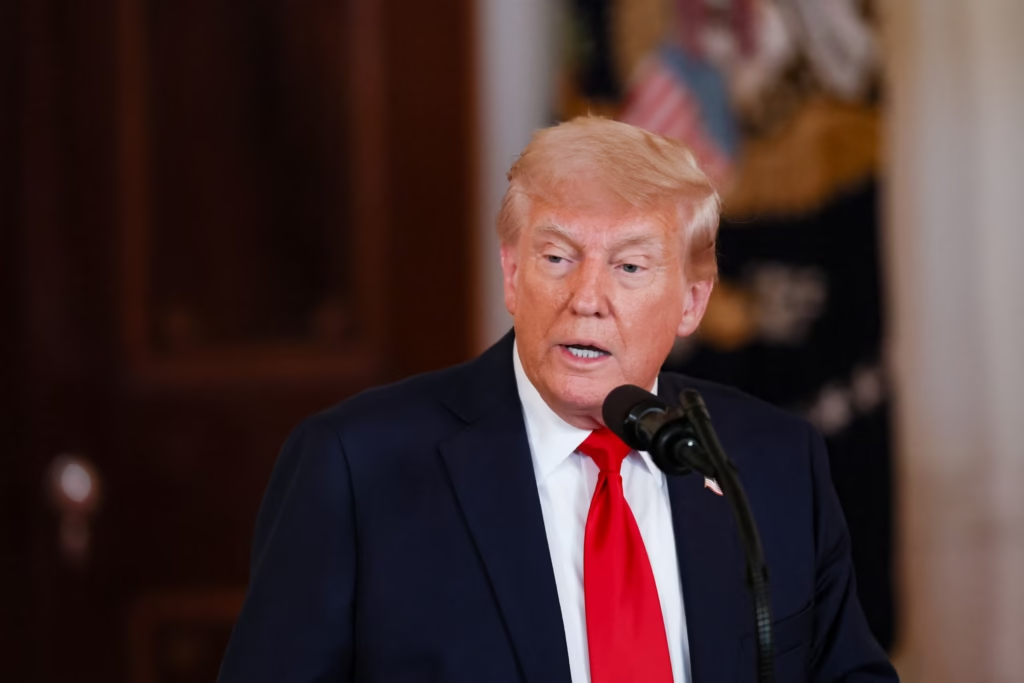
With neighbouring economies and global markets pushing forward, the urgency for South Korea to modernise its approach has intensified. Analysts believe that falling behind could erode its influence in the fast-growing crypto finance sector.
By targeting a late 2025 rollout, South Korea could position itself as a key player in Asia’s crypto investment landscape, attracting institutional interest and enhancing investor participation in regulated crypto products.
A Delicate Balance of Innovation and Oversight
As the roadmap moves forward, regulators are emphasising a cautious but constructive stance. The FSC appears committed to balancing financial innovation with robust oversight, ensuring that crypto ETFs do not expose investors to unchecked risks.
Market observers note that the initiative could open up new channels of capital flow into digital assets, bridging the gap between traditional finance and decentralised technologies. Institutional investors, in particular, may find regulated ETFs a more palatable entry point into the volatile world of crypto.
If successfully implemented, the ETF initiative could reshape South Korea’s crypto market, legitimising digital assets in the eyes of mainstream investors while fostering a safer and more transparent ecosystem.
South Korea Steps onto the Crypto ETF Stage
With a supportive administration, clear regulatory intent, and a detailed roadmap, South Korea is set to become the next major economy to embrace spot crypto ETFs. Though challenges remain, especially in balancing investor protection with market innovation.
Should the FSC stay on track, late 2025 could mark a turning point for the country’s financial markets, integrating crypto into its regulated investment landscape and signalling a new era of digital finance in South Korea.